



Newsroom

Addressing PM2.5 Pollution: Natural Sources Challenge New Air Quality Standards
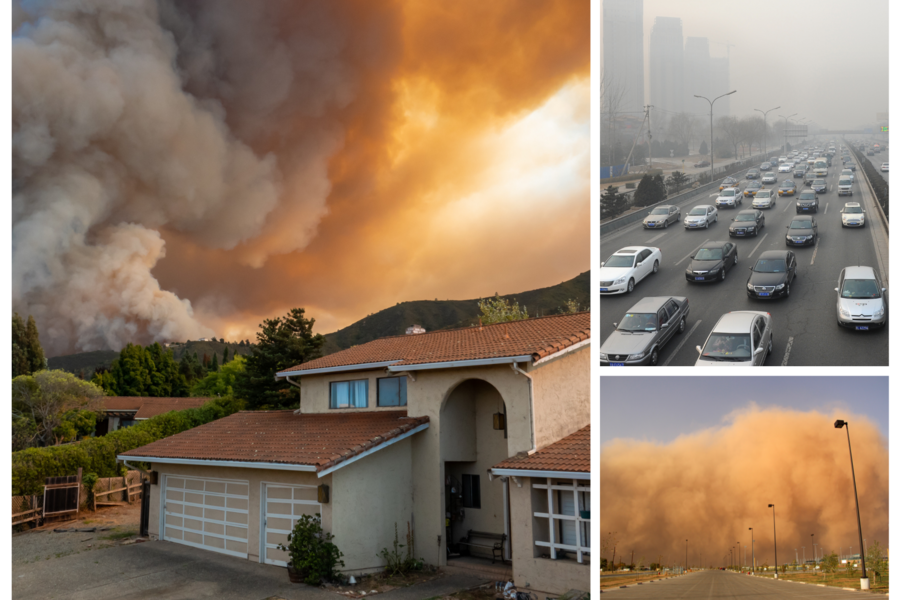
Particulate matter PM2.5 remains a critical global threat to health despite emission reduction efforts, with natural sources complicating compliance to new WHO air quality guidelines.
Global Impact of PM2.5 on Human Health
Air pollution, alongside climate change, poses one of the most significant threats to human health. A major contributor to this problem is particulate matter, particularly PM2.5, which consists of tiny particles with a diameter of 2.5 micrometers or less. These particles originate from various sources, including wildfires and fossil fuel combustion, and have the ability to penetrate our bloodstream and lungs, leading to respiratory and cardiovascular issues. Alarmingly, exposure to PM2.5 is linked to millions of premature deaths worldwide each year.
Revised WHO Guidelines and Emission Targets
In light of the growing evidence regarding the harmful effects of PM2.5, the World Health Organization (WHO) has recently revised its air quality guidelines. The new recommendation lowers the annual PM2.5 exposure limit by 50%, from 10 micrograms per cubic meter (μm3) to 5 μm3. This significant adjustment aims to strengthen regulations on anthropogenic emissions, fostering improvements in global air quality.
A recent study by researchers from the MIT Department of Civil and Environmental Engineering investigates the feasibility of achieving the updated PM2.5 guideline of 5 μm3 across various global regions, particularly under aggressive emission reduction scenarios.
Challenges Beyond Fossil Fuel Emissions
The primary focus of the research was to assess how transitioning to a fossil fuel-free future would impact different regions in meeting this new air quality standard. “Our findings indicate that while eliminating fossil-fuel emissions can enhance air quality globally, many regions may still struggle to comply with WHO guidelines due to significant contributions from natural sources,” explains Colette Heald, senior author and professor at MIT.
The study reveals that over 90% of the global population currently experiences annual PM2.5 levels that exceed the recommended limits. Even if all anthropogenic emissions were eliminated, more than half of the world’s population would remain exposed to excessive PM2.5 concentrations due to persistent natural sources like dust, sea salt, and organic compounds from vegetation.
For instance, areas in India or northern Africa that face high levels of fine dust find it particularly challenging to reduce PM2.5 levels below the new guideline. “This research prompts us to reconsider the effectiveness of various emissions reduction strategies in different regions and highlights the necessity for tailored air quality metrics that support informed decision-making,” adds Sidhant Pai, co-lead author of the study.
Regional Variations in Particulate Sources
Using advanced modeling simulations based on a variety of anthropogenic sources, researchers examined the potential outcomes of achieving the updated PM2.5 guidelines under different emissions reduction scenarios, taking 2019 as a baseline year.
By selectively turning emissions on and off in simulations, they could pinpoint the contributions of specific sources. For example, analyzing PM2.5 in the Amazon revealed a significant presence of carbon-rich aerosols primarily resulting from deforestation fires, while nitrogen-rich aerosols were predominant in Northern Europe due to vehicle emissions and fertilizer use. This indicates that diverse regions require unique policies and strategies for improving air quality.
“Focusing on particulate pollution by analyzing individual chemical components allows for more effective mitigation strategies tailored to specific regions instead of applying a generic solution,” says Pai.
“Understanding the specific chemical composition of particulate matter is key to designing regionally targeted air quality interventions that truly protect public health.”
Implications for Future Air Quality Policies
Since the last update of WHO guidelines in 2005, significant impacts have been made on environmental policies. However, as guidelines become stricter, universally applicable solutions for managing air quality are becoming less clear.
“Additionally, distinguishing between different particle types can reveal varying toxicity levels correlated with health outcomes,” comments Therese Carter, co-lead author and graduate student. “This research underscores the importance of understanding these dynamics to enhance public health strategies.”
The authors view their findings as a pivotal opportunity to refine existing guidelines further. “Comprehensive global measurements of PM2.5’s chemical composition would equip policymakers with insights into the most effective interventions for enhancing air quality in specific locations,” states Jesse Kroll, a professor at MIT.
“As we continue to uncover the health impacts associated with various particulate matter types, we hope our research contributes to developing targeted strategies aimed at reducing pollutants that pose the highest risk to human health,” concludes Heald.
