



Newsroom

Advanced Fluorescent Sensors for Deep Tissue Imaging and Drug Monitoring
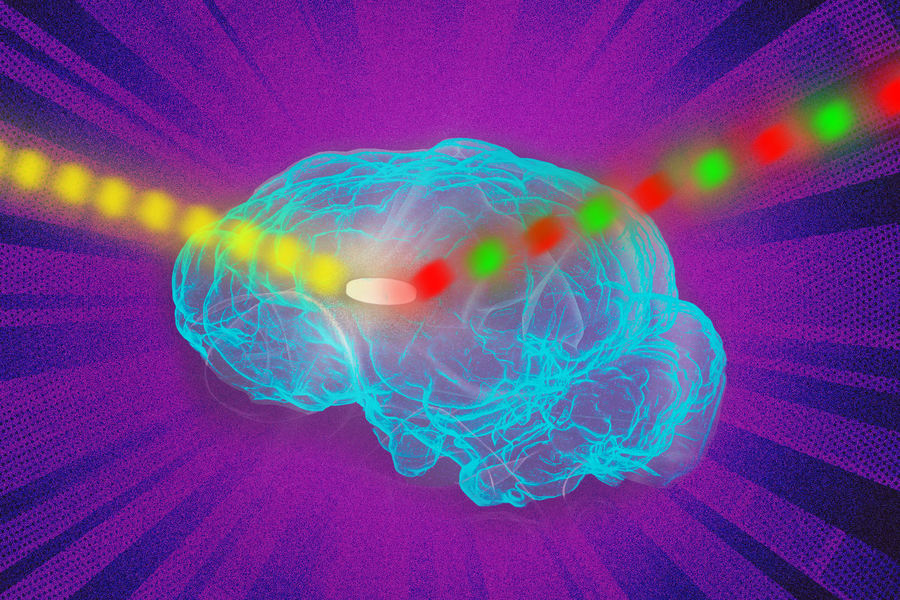
Innovative photonic techniques have empowered fluorescent sensors to maintain strong signals even when implanted 5.5 centimeters deep within tissues, revolutionizing molecular imaging and medical diagnostics.
Advancing Fluorescent Sensors for Deep Tissue Imaging
Fluorescent sensors are powerful tools capable of labeling and imaging a diverse range of molecules, providing invaluable insights into living cells. Traditionally, these sensors have been limited to use in lab-grown cells or tissues close to the body’s surface, as their fluorescent signals diminish when implanted deeper within tissues.
Researchers from MIT have developed an innovative photonic technique to enhance the performance of fluorescent sensors, significantly improving their fluorescent signal. This breakthrough enables the implantation of sensors up to 5.5 centimeters deep into tissue while still maintaining a strong and clear signal.
Implications for Medical Diagnostics and Drug Monitoring
The implications of this technology are profound, potentially allowing for the tracking of specific molecules within the brain or other internal tissues. This advancement could revolutionize medical diagnostics and enhance the monitoring of drug efficacy, providing real-time data that could improve patient outcomes.
Volodymyr Koman, an MIT research scientist and one of the study’s lead authors, explains, “This technology allows us to bridge the gap between biochemical information obtained from cell cultures and the deeper tissue layers, making it possible to utilize fluorescent dyes and probes more effectively.” The research, published in the journal of materials science Nature Nanotechnology, showcases the ability to use various fluorescent sensors—including quantum dots, carbon nanotubes, and fluorescent proteins—to label molecules inside cells.
Wavelength-Induced Frequency Filtering (WIFF) Technique
To address challenges with natural autofluorescence obscuring sensor signals in thick tissues, the MIT team introduced a technique known as wavelength-induced frequency filtering (WIFF). This method modulates the frequency of light emitted by the fluorescent sensor, allowing it to be distinguished from background noise.
By utilizing three lasers to create an oscillating wavelength beam, they successfully doubled the frequency of the emitted fluorescence, enhancing the signal-to-noise ratio by more than 50 times.
“This method works at any wavelength and is applicable to any fluorescent sensor,” emphasizing its versatility across diverse biomedical applications.
Applications in Cancer Treatment Monitoring
One promising application of this technology is monitoring chemotherapy drug effectiveness. The researchers focused on glioblastoma, an aggressive brain cancer often treated with temozolomide (TMZ) chemotherapy, which can have severe side effects and variable effectiveness.
The ability to monitor drug delivery and metabolism near tumors could significantly improve treatment strategies. As Strano states, “We aim to develop small sensors that can be implanted near tumors, allowing for external verification of drug efficacy in real-time within the tumor environment.” In experiments, a sensor detecting AIC—a compound from TMZ breakdown—was successfully implanted 5.5 centimeters deep within an animal’s brain, reading signals through the skull.
Additionally, these sensors could identify molecular signatures associated with tumor cell death, such as reactive oxygen species.
Future Developments and Biologically Resorbable Sensors
The WIFF technique is versatile beyond TMZ detection sensors. While this study utilized three lasers, future developments aim to incorporate tunable lasers to refine this method as costs decrease and speed improves.
To facilitate human applications, researchers are exploring biologically resorbable sensors that eliminate the need for surgical removal post-use—potentially enabling safer and more efficient medical monitoring solutions.
This groundbreaking research was supported by esteemed organizations including the Koch Institute for Integrative Cancer Research and Dana-Farber/Harvard Cancer Center Bridge Project, alongside contributions from various international scientific foundations.
