



Newsroom

Celebrating Pioneering Women in Science: MIT’s Groundbreaking Exhibits
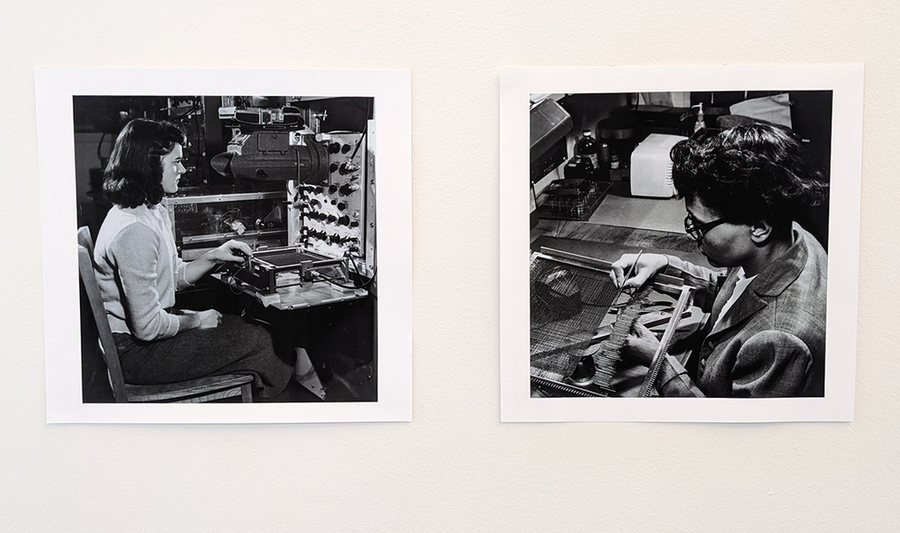
This spring, two new exhibits on campus are highlighting the significant contributions of pioneering women at the Institute. These exhibits are part of the MIT Libraries’ Women@MIT Archival Initiative, which began in 2017. The initiative not only enriches the historical narrative by collecting and preserving the papers of women associated with MIT but also shares their stories and achievements with a global audience through various channels, including exhibits, multimedia projects, and educational resources.
Exploring Women Biologists and Chemists at MIT
The first exhibit, “Under the Lens: Women Biologists and Chemists at MIT 1865-2024,” explores the impactful work of women in the fields of science and engineering at MIT, starting with Ellen Swallow Richards, the Institute’s first female student and instructor, and extending to the present day. Today, numerous women with backgrounds in biology, biological engineering, chemistry, and chemical engineering occupy key leadership roles at MIT, including President Sally Kornbluth, Vice Provost for Faculty Paula Hammond, and Professor Amy Keating, head of the Department of Biology.
Exhibit curator Thera Webb, a project archivist for Women@MIT, explains the dual meaning behind the exhibit’s title: “The women featured in ‘Under the Lens’ are scientists whose work involves the molecular aspects of our world, often explored through microscopes. The title also reflects how women’s capabilities as scientists have been scrutinized under public opinion since the Victorian era’s debates on co-education.”
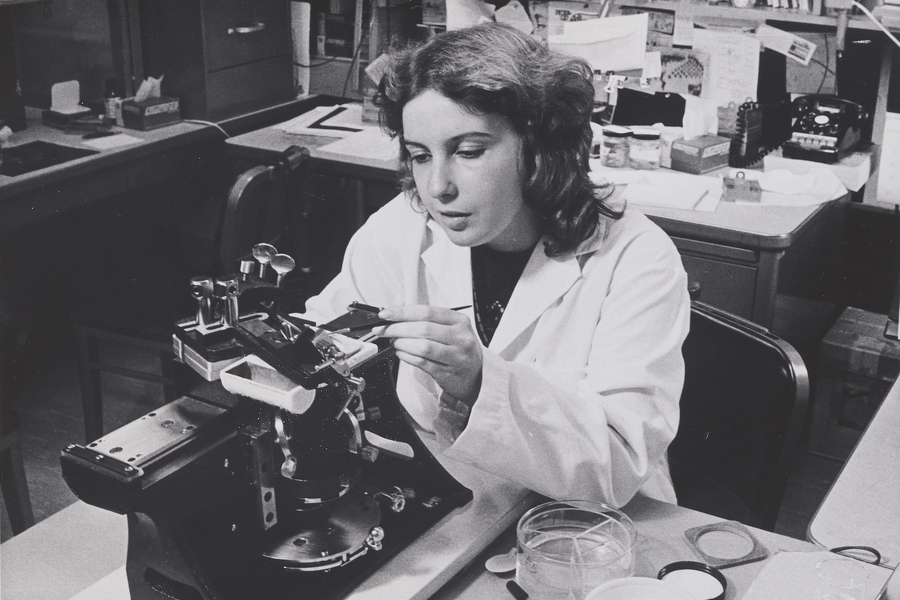
The selected items for the exhibit from Distinctive Collections illustrate the experiences of women students, research staff, and faculty. Highlights include handwritten faculty meeting notes from 1870 admitting Richards as MIT’s first female student, noting that “the Faculty are of the opinion that the admission of women as special students is as yet in the nature of an experiment.” Additional materials feature research by alumna ChoKyun Rha on printing ink from 1979, showcasing images from the development process and experimental data. Also displayed are a lab coat and rodent brain tissue slides from Susan Hockfield’s neuroscience lab, who served as MIT’s 16th president.
Webb emphasizes that these collections not only reveal the academic and professional pursuits of women at MIT through items like lab notebooks and research drafts but also highlight how the MIT community has supported women in science. Many alumnae and faculty members have played pivotal roles in founding organizations such as the Association of American University Women, the MIT Women’s Association, the Association for Women in Science, and the Women in Chemistry Group.
“The women featured in ‘Under the Lens’ are scientists whose work involves the molecular aspects of our world, often explored through microscopes.” – Thera Webb
“Under the Lens: Women Biologists and Chemists at MIT 1865-2024” will be on display in the Maihaugen Gallery (Room 14N-130) until June 21. A digital version of the exhibit is also available on the MIT Libraries’ website.
Sisters in Making: Honoring Women Computer Pioneers
The second exhibit, “Sisters in Making: Prototyping and the Feminine Resilience,” located in Rotch Library, sheds light on the often-overlooked contributions of women—referred to as “weavers”—who played crucial roles in the development of computers. Created by Deborah Tsogbe SM ’23 and current architecture graduate student Soala Ajienka, this exhibit focuses on the women who built core rope memory and magnetic core memory for the Apollo Guidance Computer.
“While we recognize the names of the first men on the Moon and those who led engineering efforts for the Apollo 11 mission, many women whose contributions were vital to these achievements remain unrecognized in historical accounts,” Tsogbe and Ajienka remark. “Our goal has been to uncover the identities of these women, who held essential roles in overseeing communications, verifying codes, conducting calculations, and creating memory systems.”
During their research in the archives, Tsogbe and Ajienka identified numerous women involved in this historical endeavor by reviewing personnel logs, press releases, and various artifacts. Initially focused on those working with rope memory, they expanded their research to include a total of 534 women across 29 job categories from nine organizations involved in the moon landing efforts. Their prototype called “memory dialer” is a tribute to these women—technicians, data key punchers, engineers, librarians, and office staff from institutions like MIT, Raytheon, and NASA.
“Sisters in Making” was developed as part of the 2023 Women@MIT Fellows program. This fellowship encourages scholars and artists to showcase materials from Distinctive Collections in innovative ways that enhance understanding of women’s history at MIT and in STEM fields. The project also received funding from the Council for the Arts at MIT.
Webb notes that Tsogbe and Ajienka’s exhibit exemplifies how diverse materials within the Women@MIT collections can be utilized. “Projects like these emphasize the importance of historical collections beyond traditional scholarly publications.”
“Sisters in Making: Prototyping and the Feminine Resilience” will be available for viewing in Rotch Library (Room 7-238) until April 8.
