



Newsroom

Empowering Communities Through Sustainable Energy Initiatives and Environmental Education
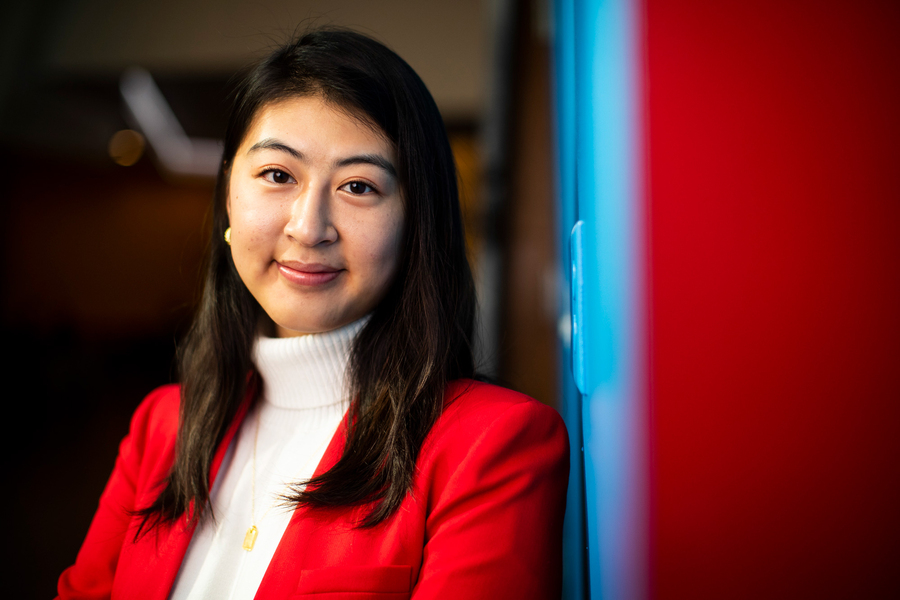
Heidi Li’s journey reveals how local community engagement and interdisciplinary education can drive impactful environmental policy and sustainable energy transitions.
Early Environmental Engagement and Community Roots
When Heidi Li was in 7th grade, she and five other members of the Oyster Gardening Club cultivated hundreds of oysters to help repopulate the Chesapeake Bay. The release event attracted local officials and TV journalists, including the governor, illuminating for young Li how grassroots efforts can generate meaningful real-world impact. Growing up in Howard County, Maryland, her frequent family trips to Chesapeake Bay connected her to nature and the cultural heritage of her parents from Shandong, China.
Academic Pursuits in Materials Science and Environmental Research
At MIT, Li majors in materials science and engineering. Her first-year microbiology research through UROP examined aquatic microbes and how water cleanliness influences marine bacterial immunity and behavior. This experience prompted her to explore how environmental policy shapes sustainability, particularly questioning how economic principles can be applied to energy systems.
Bridging Policy and Energy Transition
During the Roosevelt Project at the Center of Energy and Environmental Policy Research, Li investigated energy transition strategies in Pittsburgh. She evaluated shifting from fossil fuels to carbon-capture technologies and engaged with community stakeholders to foster grassroots dialogue on sustainable energy. Her internship at Wood Mackenzie further deepened her understanding of cost-effective technology implementation for decarbonization.
“Empowering students to think about solutions for themselves is key to inspiring hope and change within communities.”
Leadership in Sustainability Education and Community Building
As president of the Sustainable Energy Alliance (SEA), Li promotes climate awareness among students and spearheaded a hackathon focused on humanitarian challenges like environmental injustice. She also produces the “Open SEAcrets” podcast to engage MIT students on energy sustainability topics and nurture a sense of community around these issues.
Future Vision: Climate Education and Empowering New Generations
Li’s current UROP project, Climate Action Through Education (CATE), develops K-12 curricula integrating climate change with math, science, history, and psychology perspectives. Her overarching goal is to empower younger generations with solution-oriented mindsets and ensure local communities have a voice in sustainable policy implementation.
