


Newsroom

Empowering Global Learners Through Innovative Online Education Solutions
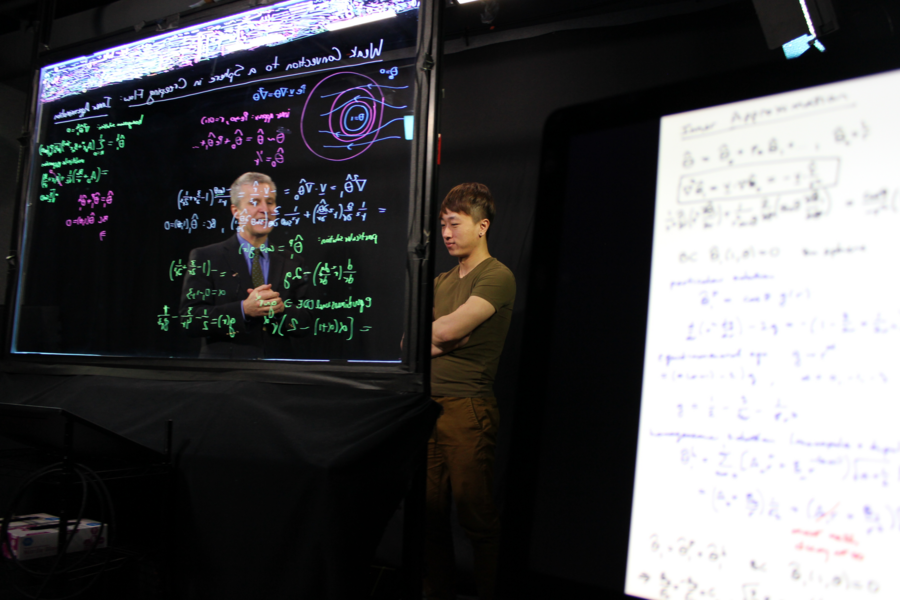
When Aya Khalifa arrived at MIT from Egypt to pursue her master’s degree in chemical engineering, she quickly acclimated to the new academic environment, largely due to the innovative Math Boot Camp for Engineers (10.MBC). This online program, created by the MIT Digital Learning Lab (DLL) in collaboration with the Department of Chemical Engineering, is tailored for first-year graduate students seeking to refresh essential math skills necessary for their core courses.
A Transformative Learning Experience
Khalifa described the experience as transformative, stating it opened her up to various problem-solving approaches. She began using the program during the summer before her official studies commenced and continued to utilize it throughout the semester to reinforce her understanding of key concepts.
This online resource is now available globally as a massive open online course (MOOC), allowing learners worldwide to benefit. The DLL’s mission is to enhance digital learning initiatives at MIT while expanding access to quality education on a global scale.
The Digital Learning Lab’s Role
The DLL, a collaborative effort between MIT Open Learning and various academic departments, comprises a team of experts dedicated to fostering digital learning innovations. By merging their academic knowledge with instructional design, DLL staff strive to apply the latest advancements in learning sciences and educational technologies in course development.
“The DLL team engages in diverse and creative initiatives that are informed by robust teaching and learning evidence,” said Christopher Capozzola, senior associate dean for open learning. “They integrate advanced technologies into classroom experiences and partner with faculty to design new courses and programs, contributing a unique blend of academic insight and digital flexibility across MIT departments.”
Over the past decade, the DLL has evolved to cover comprehensive aspects of online learning research and implementation. Faculty collaborate with digital learning scientists to weave technology into the fabric of MITx courses, including MicroMasters programs that provide credential-bearing opportunities, helping individuals expedite their educational journeys while managing costs.
Impact on Graduate Students
Khalifa found that the knowledge gained from Math Boot Camp was directly applicable to her core graduate courses such as Analysis of Transport Phenomena (10.50) and Chemical Reactor Engineering (10.65). “I didn’t face challenges with mathematical equations since I was already equipped with the necessary tools before diving into new content,” she remarked.
The chemical engineering department’s goal was realized when they approached Joey Gu, a lecturer and digital learning scientist, to enhance the first-semester experience for graduate students. Gu collaborated with faculty and students to create the initial version of Math Boot Camp for Engineers, launched in summer 2020. Today, it consists of six self-paced modules covering diverse mathematical topics, allowing students to navigate the content based on their individual needs assessed through diagnostic quizzes.
“I appreciated the flexibility of learning at my own pace,” Khalifa shared, noting that the platform’s user-friendly design significantly contributed to her experience. The short instructional videos effectively broke down complex concepts compared to traditional hour-long lectures.
Immediate feedback was a key feature of her online learning experience. “I didn’t have to wait for an instructor’s response. I could solve problems instantly and receive explanations on the correct answers, which I valued as a student,” she stated.
“There’s an entire world of potential learners and knowledge waiting to be explored. The more we understand this landscape, the richer we can make learning experiences for diverse audiences.” – Jessica Sandland
Advancing Online Education Through Research
As pioneers in open online course design, digital learning scientists actively contribute research in learning science and their specialized fields. They engage in conferences, conduct workshops, and share their insights with faculty and the broader educational community.
This semester, Mary Ellen Wiltrout and Jessica Sandland are chairing the 2023 IEEE Learning with MOOCs Conference (LWMOOCs), taking place at MIT on October 11-13. The conference serves as a platform for academic and industry experts to discuss recent developments in MOOCs, focusing on blended learning strategies aimed at increasing educational accessibility for learners facing opportunity gaps while promoting sustainability education.
“Ten years ago, our discussions revolved around standalone online courses; now there’s a growing interest in exploring diverse educational landscapes that leverage online formats to enhance accessibility and affordability,” Sandland noted.
Attendees will also participate in workshops centered around AI in education and inclusive teaching practices while gaining insights from experts involved in MOOC development and management.
“We aim to showcase research, case studies, and frameworks from those creating and studying MOOCs to foster communal learning and advance the field,” Wiltrout explained. With extensive experience managing numerous MOOC runs since 2013, she emphasizes the importance of collaboration within the community.
Through their engagement in LWMOOCs and ongoing research at DLL, MIT’s digital learning scientists remain at the forefront of best practices in online teaching and innovations in digital education.
