



Newsroom

Innovative Accenture Fellows Driving Industry-Tech Convergence at MIT
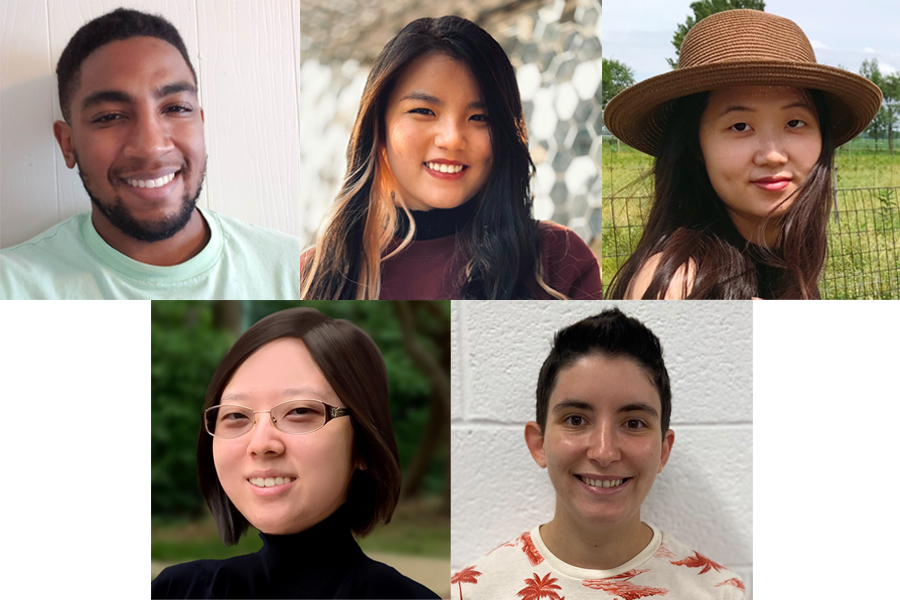
The Convergence Initiative for Industry and Technology drives innovation by fostering collaboration between diverse fields through research, education, and fellowships supporting underrepresented groups.
Overview of the Initiative
Launched in October 2020, the Convergence Initiative for Industry and Technology emphasizes collaboration as a catalyst for innovation. This five-year program supports comprehensive research, educational programs, and fellowships designed to empower underrepresented groups differentiated by race, ethnicity, and gender.
Diverse Fellowship Projects
Each year, five fellowships are awarded to graduate students at MIT conducting research at the intersection of industry and technology. This year’s fellows explore areas including telemonitoring, human-computer interaction, operations research, AI-mediated socialization, and chemical transformations.
Their projects vary in impact and scope. Some focus on developing low-power processing hardware to enhance telehealth applications, while others utilize machine learning to optimize business operations. Efforts also include leveraging artificial intelligence to improve mental health care and analyzing environmental and health effects of complex chemical reactions.
Selection and Research Highlights
The fellowship selection invites nominations from departments across MIT’s School of Engineering and the Schwarzman College of Computing. Now in its third cycle, five exceptional students were chosen.
Drew Buzzell, a doctoral candidate in electrical engineering and computer science, researches telemonitoring using Internet of Things (IoT) devices and edge computing architectures to manage data closer to its source, addressing challenges from high data volumes.
Mengying (Cathy) Fang, a master’s student at the MIT School of Architecture and Planning, specializes in augmented reality (AR) and virtual reality (VR). She develops innovative sensors combining computation with materials science, exploring soft robotics integrated into wearable devices with enhanced haptic feedback.

Applications in Operations and Health
Xiaoyue Gong, a doctoral candidate in operations research at MIT Sloan School of Management, applies machine learning and data science to eliminate inefficiencies in business operations through reinforcement learning methods tailored for diverse sectors.
Ruby Liu, pursuing her doctorate in Medical Engineering and Medical Physics via the Harvard-MIT Program in Health Sciences and Technology, addresses loneliness among older adults—especially in marginalized communities—by designing interconnected AI agents that provide mental health support and foster social connections.
“Innovation thrives when technology converges with industry to empower diverse voices and transform lives.”
Advancing Chemical Science with Machine Learning
Joules Provenzano, a doctoral candidate in chemical engineering, integrates machine learning with liquid chromatography-high resolution mass spectrometry (LC-HRMS) to advance understanding of complex chemical reactions affecting environmental contexts. His work aims to accelerate discoveries benefiting industries such as oil and gas, pharmaceuticals, and agriculture.
