



Newsroom

Innovative Cancer Vaccine Enhancing Immune Response through STING Pathway

Immune checkpoint blockade therapies have transformed the landscape of cancer treatment, emerging as one of the most promising options for conditions like melanoma, colon cancer, and non-small cell lung cancer. While these therapies can trigger a robust immune response to eliminate tumors in some patients, they do not yield positive outcomes for all tumor types or individuals.
The Promise and Limitations of Immune Checkpoint Blockade
Immune checkpoint blockade therapies have revolutionized treatment paradigms by enhancing the immune system’s ability to attack tumors. However, only a small subset of patients experience long-term benefits, and some may suffer cancer recurrence after initial success.
Innovative STING-Based Therapeutic Cancer Vaccine
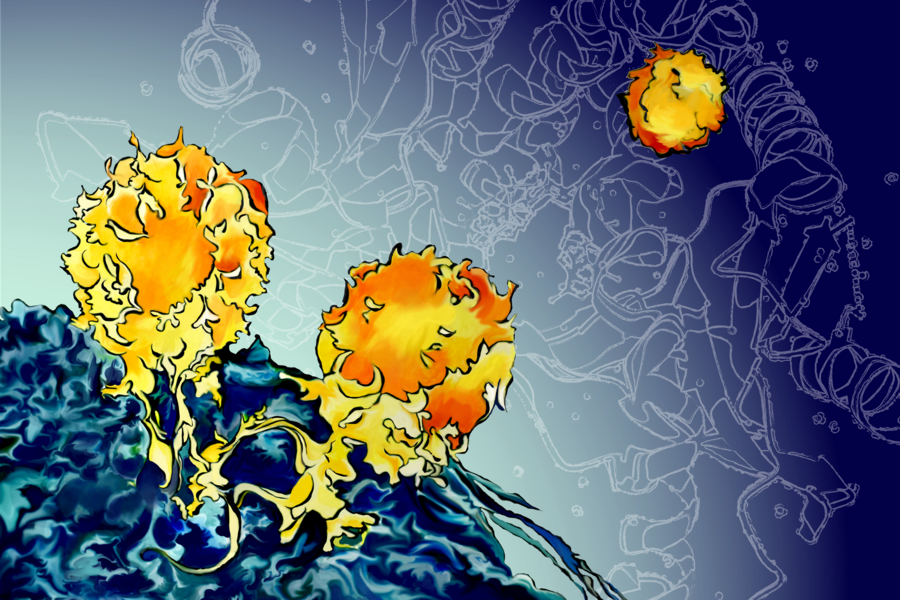
Researchers at MIT have developed a novel cancer vaccine that restores STING signaling, demonstrating remarkable tumor eradication in colon cancer and melanoma mouse models with minimal side effects. This vaccine also effectively inhibits metastasis and prevents tumor recurrence.
Mechanism and Collaborative Research Efforts
The vaccine utilizes a repurposed adaptor protein that initiates and sustains antitumoral immunity, stimulating vigorous immune responses and fostering long-term memory against tumors. This work was led by MIT postdoc Yanpu He in collaboration with the Koch Institute’s Paula Hammond lab and other key contributors.
“We have repurposed a naturally occurring adaptor protein into a unique, dual-functional cancer vaccine that initiates and sustains effective antitumoral immunity.” – Angela Belcher
STING Pathway’s Role and Challenges in Cancer Therapy
The STING pathway amplifies immune responses against pathogens and tumors, influencing immune cell maturation and activation. Despite promising clinical trials combining checkpoint blockade with STING-targeted therapies, FDA approval remains limited due to potential systemic toxicity and genetic variability among patients.
To overcome these issues, the team engineered a protein complex combining STING signaling domains with cGAMP and an immune checkpoint nanobody, enabling localized tumor treatment with minimal systemic side effects.
Efficacy Demonstrated in Preclinical Models
Direct injection of the vaccine eradicated 70-100% of tumors in mouse models of colon cancer and melanoma. Treated mice showed minimal weight loss and sustained tumor-free status for over six months. Even mice with mutated STING genes experienced significant tumor reduction, highlighting the vaccine’s restorative potential.
Revealing the Crucial Role of CD4+ T Cells
Contrary to previous assumptions, CD4+ T cells play an essential role in antitumor immunity induced by this vaccine. Depletion studies revealed that without CD4+ T cells, the vaccine’s effectiveness is lost, underscoring their importance alongside CD8+ T cells and natural killer cells.
“Understanding how CD4+ T cells are polarized and activated is crucial for harnessing their potential in cancer therapies.” – Yanpu He
Future Directions and Support
The researchers aim to develop this vaccine into a modular platform adaptable for diverse checkpoint therapies, optimizing dosing and exploring new nanobodies to improve outcomes for patients with STING mutations.
This pioneering study was supported by the Koch Institute Frontier Research Program and the Marble Center for Cancer Nanomedicine.
