



Newsroom

Innovative Carbohydrate-Binding Proteins for Enhanced Glycobiology Research
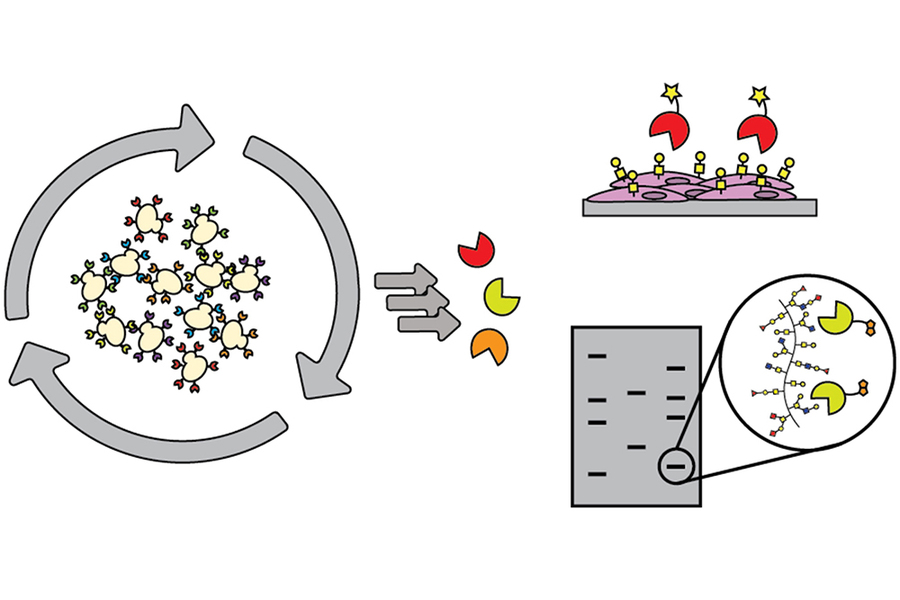
Recent advancements in carbohydrate research introduce novel protein binders with programmable specificity, overcoming traditional limitations and opening new horizons in diagnostics and therapeutics.
Challenges in Carbohydrate Binding Protein Development
Carbohydrate research traditionally suffers from a limited set of tools to analyze sugar roles due to the weak binding affinity and size of lectins—plant- or fungi-derived sugar-binding proteins. The biosynthesis of carbohydrates lacks a template-driven mechanism, making it difficult to generate specific antibodies. These antibodies tend to be large, costly, and often ineffective for detailed study. Identifying smaller, selective binding proteins remains an unmet need to enable precise carbohydrate detection and manipulation.
Innovative Directed Evolution Techniques
The recent study led by Professor Barbara Imperiali employs directed evolution and novel screening methods to derive carbohydrate-binding proteins from non-binding precursors. This platform offers programmable binding specificities, liberating researchers from traditional lectin constraints and antibody generation challenges. Such technology promises the design of binders tailored to user-defined sugar targets, advancing glycobiology research significantly.
“The carbohydrate sector remains significantly underdeveloped and is in dire need of new tools despite advancements in biology and medicine.” — Professor Barbara Imperiali
Future Applications in Diagnostics and Therapeutics
This breakthrough holds vast potential across diagnostics and long-term therapies. Collaborations with institutions like MIT aim to target unique sugars on pathogens such as Mycobacterium tuberculosis (Mtb). Furthermore, developments in paper-based diagnostic devices and lateral flow assays could benefit from evolved glycan binders, enabling sensitive detection of disease markers.
Enhancements in Cell Imaging and Microbiome Analysis
Modified binders tagged with fluorophores can revolutionize cell imaging by labeling specific sugars on cancer cells or bacteria. This facilitates advanced fluorescence-activated cell sorting and microbiome screening across diverse body sites. The versatility of these binders may also pave the way for targeted therapeutic interventions by selectively eliminating bacteria based on their sugar display.
Image credit: Novel carbohydrate-binding protein platform enabling programmable specificity.
