


Newsroom

Innovative Hydrogel Technology for Efficient Micropollutant Removal in Water Treatment
MIT researchers are pioneering a sustainable hydrogel microparticle technology to efficiently remove hazardous micropollutants from water, promising scalable, cost-effective solutions that outperform traditional methods.
Innovative Grant Supports Cutting-Edge Water Pollution Research
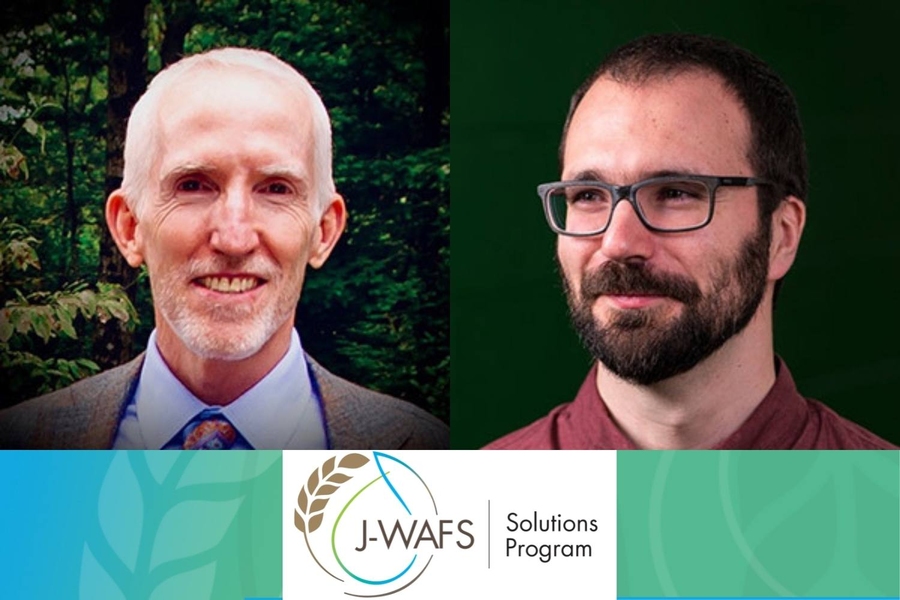
The Abdul Latif Jameel Water and Food Systems Lab (J-WAFS) has awarded a 2022 J-WAFS Solutions grant to Patrick S. Doyle, a leading professor in Chemical Engineering at MIT. This funding supports his groundbreaking initiative aimed at addressing water pollution. Collaborating with co-Principal Investigator Rafael Gomez-Bombarelli and PhD students Devashish Gokhale and Tynan Perez, Doyle’s research builds on insights from a previous 2019 J-WAFS seed grant. Together, they will develop cost-effective, scalable processes to efficiently eliminate micropollutants from water, with project activities commencing this month.
From Laboratory Breakthroughs to Market Impact
The J-WAFS Solutions program aims to accelerate the transition of MIT’s innovative technologies from the lab to the marketplace by offering one-year, renewable commercialization grants. With grants reaching up to $150,000, researchers are empowered to advance breakthrough technologies in the realms of water and food. Since its inception in 2015, this program has successfully led to the establishment of seven spinout companies and facilitated the commercialization of two products as open-source technologies, backed by Community Jameel.
The Hidden Threat of Micropollutants in Drinking Water
Micropollutants, despite their low concentrations in the environment, pose significant risks due to continuous exposure and bioaccumulation. The U.S. Environmental Protection Agency has identified various common micropollutants such as Bisphenol A (BPA), per- and polyfluoroalkyl substances (PFAS), and heavy metals like lead, which are found in over 85% of U.S. rivers, ponds, and lakes—many of which serve as drinking water sources. Prolonged exposure to these contaminants can lead to serious health issues, including cancer, developmental disorders, and reproductive failures.
“Emerging micropollutants are an escalating threat to global drinking water supplies.”
Challenges of Detecting and Removing Micropollutants
Detecting and monitoring micropollutants is challenging due to their low concentrations and diverse chemical nature. Currently, activated carbon is the prevalent method for their removal; however, this approach falls short in effectively eliminating contaminants present at parts-per-billion and parts-per-trillion levels. Furthermore, the production of activated carbon raises sustainability concerns due to its energy-intensive processes that release substantial amounts of carbon dioxide.
Sustainable Hydrogel Microparticles Revolutionize Water Treatment
To address these challenges, Doyle and his team are pioneering a technology utilizing sustainable hydrogel microparticles for the removal of micropollutants from water. These polymeric hydrogel microparticles feature chemically anchored structures like micelles and chelating agents that function similarly to a sponge, effectively absorbing organic micropollutants and heavy metal ions. Additionally, their size allows for easy separation from water through simple gravitational settling. The sustainability of this system lies in the ability to recycle microparticles for continuous usage. Preliminary testing indicates that these reusable microparticles outperform commercial activated carbon in contaminant removal speed.
Market Potential and Commercialization Pathway
The economic potential of this innovative technology spans numerous significant markets where micropollutant elimination is crucial, including municipal and industrial water treatment systems as well as home water purification solutions. The J-WAFS Solutions grant will enable the research team to construct and evaluate prototypes of the water treatment system, pinpoint optimal applications and target customers, and conduct technoeconomic analyses along with market research to create a foundational business plan. With support from J-WAFS for commercialization, this project may pave the way for a future startup.
“Emerging micropollutants are an escalating threat to global drinking water supplies,” emphasizes J-WAFS Director John H. Lienhard, the Abdul Latif Jameel Professor of Water at MIT. “There is an urgent need for cost-effective and scalable technologies to remove these pollutants. This project aims to develop and commercialize an innovative tool for water treatment, ultimately enhancing water quality for millions.”
