



Newsroom

Innovative MIT PhD Students Tackle Global Water Scarcity with Cutting-Edge Research
Since its inception in 2014, the Water and Food Systems Lab has been at the forefront of interdisciplinary research, tackling critical issues related to global water and food security. To further support innovative research, the lab introduced the Rasikbhai L. Meswani Water Solutions Fellowship and the J-WAFS Graduate Student Fellowship in 2017. These programs are designed to empower exceptional graduate students at MIT who are dedicated to developing solutions that can positively impact water and food systems worldwide.
Empowering Graduate Researchers to Combat Water Scarcity
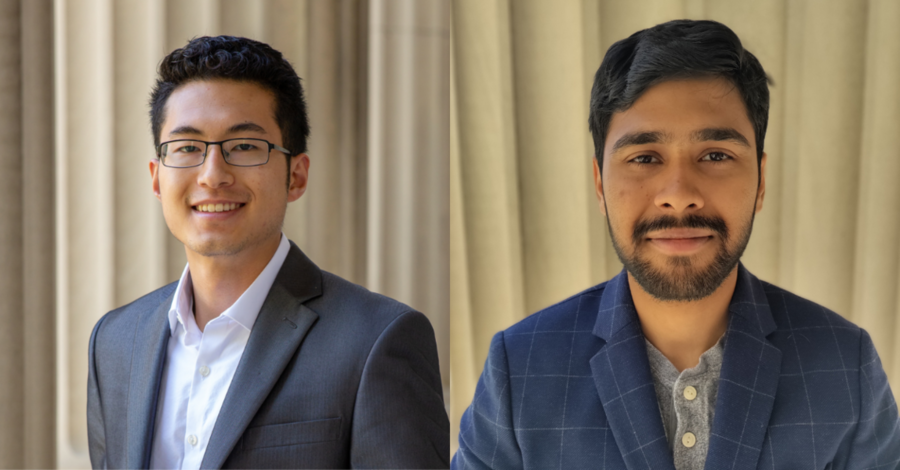
Recently, two promising PhD students, Jonathan Bessette and Akash Ball, were awarded the 2024-25 fellowships. Their research aims to mitigate water scarcity by enhancing desalination and purification processes, which is increasingly vital as climate change continues to deplete freshwater resources. Currently, one-third of the global population lacks access to safe drinking water. Bessette and Ball are committed to designing innovative, sustainable solutions that enhance the resilience of global water systems. The fellowships will provide each recipient with funding for one academic semester to support their ongoing research.
According to J-WAFS executive director Renee J. Robins, this year’s fellowship selection was highly competitive. “Bessette and Ball distinguished themselves among a strong field of applicants, showcasing their potential to develop transformative solutions for global water challenges,” she stated.
Jonathan Bessette’s Innovative Desalination Technologies
The Rasikbhai L. Meswani Fellowship for Water Solutions is a prestigious doctoral fellowship for students focusing on water-related research at MIT, generously funded by Elina and Nikhil Meswani and their family.
Jonathan Bessette is pursuing his doctorate in the Global Engineering and Research (GEAR) Center within the Department of Mechanical Engineering at MIT, under the guidance of Professor Amos Winter. His research concentrates on developing water treatment systems tailored for the developing world, particularly focusing on desalination, which involves removing salts from water. Bessette is currently working on an innovative, cost-effective community-scale desalination system designed for use in humanitarian crises.
In regions where water scarcity is prevalent, groundwater often becomes the primary source despite its salinity challenges. Many remote areas lack reliable power and centralized water systems, making brackish groundwater desalination a crucial solution for addressing global water shortages.
Bessette emphasizes, “There is a significant need for desalination technologies targeting inland groundwater aquifers rather than just coastal areas, as many populations reside far from coastlines.” His project focuses on creating affordable, renewable-powered desalination technologies suitable for remote communities facing extreme conditions.
To achieve his objectives, Bessette has developed a batteryless, renewable electrodialysis desalination system that is energy-efficient and environmentally friendly. This decentralized approach not only conserves water but also presents substantial advantages over traditional reverse osmosis methods by reducing energy consumption during brackish water treatment. His advisor has praised Bessette’s engineering insight, highlighting a ‘simple and elegant solution’ that eliminates the need for large batteries.
Originally from upstate New York, Bessette holds a bachelor’s degree from the State University of New York at Buffalo. His commitment to sustainability began during his undergraduate studies when he taught engineering principles to middle and high school students in underserved communities. A transformative trip to India solidified his dedication to addressing global challenges related to food, water, and sanitation.
Additionally, Bessette is involved in another project supported by a J-WAFS India grant, focusing on low-cost remote sensors to analyze water fetching practices in rural India. He collaborates with fellow MIT student Gokul Sampath to help families access safe drinking water.
Akash Ball’s Research on Advanced Ion Separation Membranes
The J-WAFS Graduate Student Fellowship is made possible through collaborations with industry partners invested in water and food research. Notable supporters include Xylem, a leader in water treatment solutions, and GoAigua, a pioneer in digital transformation within the water sector.
Akash Ball, a doctoral candidate in Chemical Engineering at MIT, is advised by Professor Heather Kulik. His research involves discovering innovative functional materials for energy-efficient ion separation membranes with high selectivity—essential for applications such as water desalination and heavy metal removal from wastewater.
“Approximately 4 billion people experience severe water distress annually due to climate change and pollution, with 2 billion residing in semi-arid regions of India and China.” – Akash Ball
Ball notes, “Desalination of seawater could be a viable solution since it constitutes 97% of Earth’s water supply.” Despite the availability of commercial reverse osmosis membranes, they face several challenges including slow permeation rates and high costs. Ball’s research focuses on metal-organic frameworks (MOFs), which are promising for selective ion separation due to their porous nature and tunable chemical properties.
In the Kulik lab, Ball aims to understand how MOF chemistry influences water transport and ion rejection rates. His goal is to identify high-performing MOFs using machine learning models while also proposing new designs tailored for specific ion separations.
Ball’s advisor commends his creativity and leadership skills that enhance the entire lab’s productivity. Before joining MIT, Ball earned a master’s degree in chemical engineering from IIT Bombay and a bachelor’s degree from Jadavpur University in India. His research internship at IIT Bombay sparked his interest in addressing global water challenges, particularly due to personal experiences growing up in an area with limited access to safe drinking water.
