



Newsroom

Innovative MIT Research Projects Tackling Water and Food Security Challenges
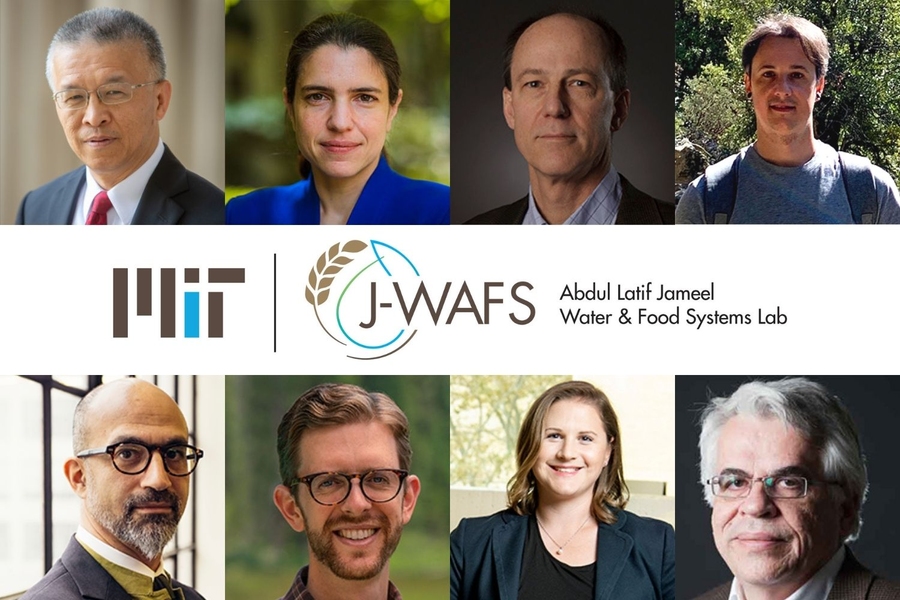
The MIT J-WAFS initiative is driving transformative research in water and food sustainability, funding innovative projects that address critical global challenges through cutting-edge science and technology.
Overview of the J-WAFS Seed Grant Program
The material and science-focused J-WAFS program at MIT is the institute’s sole dedicated effort targeting water and food challenges. Over the past eight years, it has awarded seed grants up to $75,000 annually for two years to early-stage projects in areas like food safety, supply chain management, and sustainability. These grants have fostered interdisciplinary approaches spanning engineering, technology, social sciences, and economics.
2022 Projects Tackling Critical Water and Food Issues
In 2022, eight researchers across four MIT departments received funding to pursue advanced solutions such as removing harmful chemicals from water, developing drought monitoring systems for farmers, and enhancing shellfish industry management. Their work leverages innovative technologies and advanced materials aimed at improving resource management on a global scale.
Key Researchers and Their Innovations
Gang Chen is pioneering a solar-powered desalination process using a photomolecular effect that drastically lowers energy consumption compared to traditional methods. Meanwhile, Ariel L. Furst focuses on eliminating persistent pollutants like PFOA from water using low-energy enzyme materials that degrade contaminants rather than merely capturing them.
Computational advances by Heather J. Kulik involve engineering metal-organic frameworks (MOFs) for precise ion separation to enhance water purification technologies. Gregory C. Rutledge addresses oil pollution through liquid-infused membranes (LIMs) that reduce fouling during filtration.
Applications in Environmental and Agricultural Management
Research collaborations like that of John E. Fernández and Scott D. Odell explore how desalination mitigates water scarcity impacts from mining activities in Chile, protecting vital Andean glaciers. Satellite imaging technology by César Terrer enables high-resolution drought monitoring critical for plant water stress assessment and sustainable farming.
Michael Triantafyllou develops web-based geospatial tools to support aquaculture management and regulatory compliance in Massachusetts fisheries, addressing climate-related habitat restoration challenges.
“Innovative research at the intersection of water and food security holds the key to tackling our planet’s most urgent sustainability challenges.”
