



Newsroom

Innovative MIT Research Tackles Global Water and Food Security Challenges
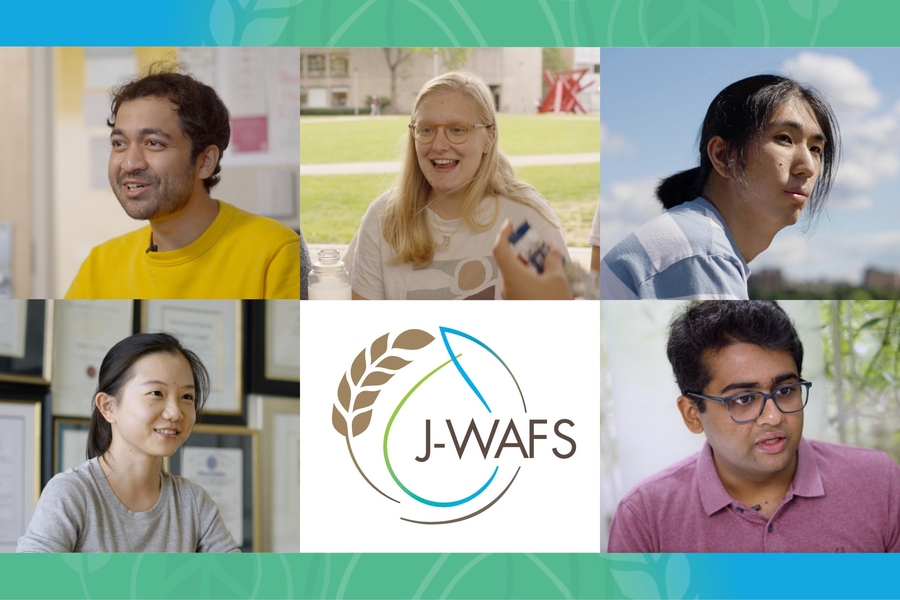
Innovative research at MIT is tackling urgent global challenges in water and food security by developing sustainable, efficient, and accessible solutions that address pollution, climate impacts, and resource scarcity.
Addressing Global Water and Food Challenges
Recent headlines highlight the urgent challenges facing global water and food security. Factors such as pollution, supply chain disruptions, and the ongoing conflict in Ukraine are exacerbating these issues, while climate change continues to increase the frequency of heat waves, droughts, floods, and wildfires.
MIT Fellowships Empower Innovation
In response to these pressing challenges, MIT’s Abdul Latif Jameel Water and Food Systems Lab (J-WAFS) annually offers fellowships to exceptional graduate students focused on innovative solutions for securing water and food supplies. This year’s recipients were announced last April, with Aditya Ghodgaonkar and Devashish Gokhale receiving the Rasikbhai L. Meswani Fellowships for Water Solutions, funded by a generous donation from the Meswani family. Additionally, James Zhang, Katharina Fransen, and Linzixuan (Rhoda) Zhang were awarded J-WAFS Fellowships for Water and Food Solutions, supported by J-WAFS Research Affiliate companies such as Xylem, Inc. and GoAigua.
Each of the five fellows received a stipend along with full tuition for one semester. They also gain valuable mentorship, networking opportunities, and platforms to present their research findings.
Innovations in Biodegradable Materials
Katharina Fransen, a third-year PhD student in Professor Bradley Olsen’s lab within the Department of Chemical Engineering, focuses on developing biodegradable plastics for food packaging that minimize environmental pollution. Fransen is driven by the necessity to protect vulnerable communities from waste associated with essential food supply materials. “We can’t guarantee that all plastic waste is recycled or reused,” she states. “So our goal is to create materials that can degrade if they enter the environment.” Her research involves designing polymers optimized for food packaging, which helps keep food fresher longer and reduces waste.
Advanced Irrigation Technologies
PhD candidate Aditya Ghodgaonkar shares his insights gained during a spring break trip to Kenya where he engaged with local farmers about their irrigation challenges. Working under Associate Professor Amos Winter at the Global Engineering and Research (GEAR) Lab, he is developing hydraulic components for drip irrigation systems that are efficient, off-grid, affordable, and require minimal maintenance. Through hands-on discussions with farmers about emitter clogging issues, Ghodgaonkar has committed to designing emitters that resist clogs, utilizing sand and passive hydrodynamic filtration methods.
Sustainable Water Treatment Materials
Devashish Gokhale, also pursuing a PhD in Chemical Engineering under Professor Patrick Doyle’s guidance, draws from his experiences in Pune, India—where both flooding and drought occur—to fuel his dedication to global water security. He is innovating sustainable materials for water treatment focused on removing emerging contaminants and heavy metals through polymeric hydrogel microparticles that effectively absorb micropollutants. Gokhale emphasizes the importance of ensuring that his solutions are not only scientifically sound but also economically viable for those who need them most.
“Incremental innovations driven by real-world needs can lead to transformative impacts on global water and food security.”
Cutting-Edge Water Purification Research
PhD student James Zhang notes the disparity in water access worldwide as he works in the Nano Engineering Laboratory with Professor Gang Chen. He is researching light-induced evaporation technology aimed at purifying water and is currently exploring how different light wavelengths interact with liquids at surfaces, especially brackish water. His work holds potential for high-efficiency desalination methods that could provide clean water to communities lacking access.
Nutrient Fortification Through Polymer Science
Lastly, Linzixuan (Rhoda) Zhang highlights a significant global health issue: micronutrient deficiency affecting around 2 billion people due to limited access to nutritious food. In collaboration with professors Robert Langer and Ana Jaklenec, she is developing a platform for fortifying foods with essential nutrients. Zhang focuses on stabilizing vitamin A through biodegradable polymers to prevent degradation during cooking and storage, thereby enhancing food quality and nutritional availability. She believes that consistent progress through incremental innovations will ultimately lead to impactful solutions.
