



Newsroom

Innovative Nanoscale Research and Development: Celebrating MIT.nano’s Five-Year Milestone

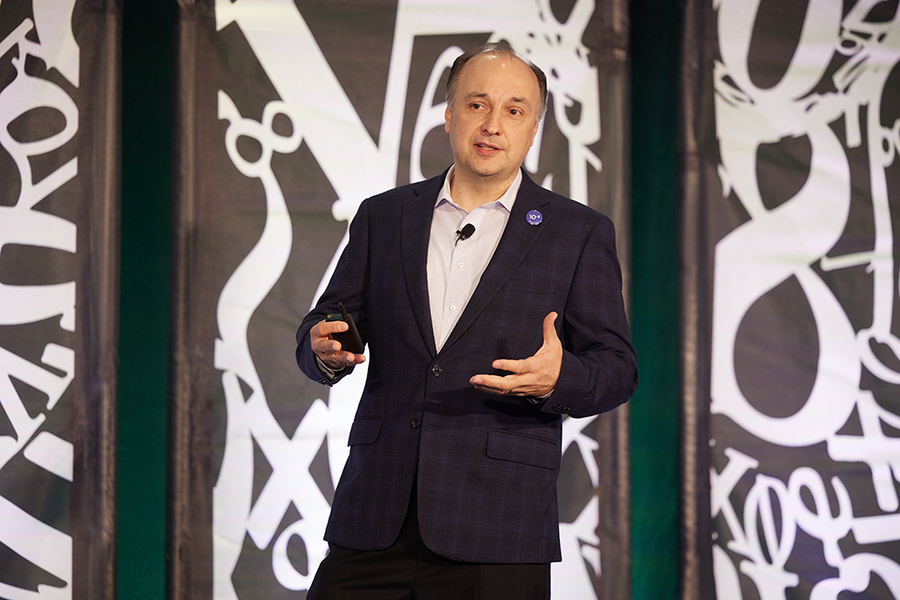
The world is on the brink of a nanoscale innovation revolution, as highlighted by the director of MIT.nano, Vladimir Bulović, during the inaugural Nano Summit. He posed critical questions about the future of this transformative technology: "Where are we heading? And what is the next big thing we can develop?"
A Vision for Nanotechnology’s Future
Bulović emphasized that the core mission is to change the world through nanotechnology. This message resonated with over 325 in-person attendees and 150 virtual participants who gathered to discuss advancements in nano-related research and celebrate the fifth anniversary of MIT.nano.
The State-of-the-Art MIT.nano Facility
MIT launched an ambitious project over a decade ago to create a state-of-the-art facility dedicated to nanoscale research. Construction of MIT.nano, likened to building a ship in a bottle, began in 2015 and culminated in its opening in October 2018. Today, it boasts nearly 170 advanced tools and instruments, catering to over 1,200 trained researchers from more than 300 labs across 50 MIT departments, as well as external users from industry and academia.
Highlights from the First Nano Summit
The first Nano Summit, held on October 24, served as a platform for faculty, researchers, and industry partners to explore recent developments in areas such as quantum science, advanced electronics, energy, and biology. The event featured six topical sessions, startup showcases, and an art exhibition, highlighting the intersection of science and creativity.
“Innovative microscopy techniques are revealing unprecedented insights into nanoscale functional materials, driving breakthroughs across multiple scientific disciplines.”
Cutting-Edge Research in Materials and Biology
Frances Ross, TDK Professor in Materials Science and Engineering, pointed out the necessity for innovative approaches in material development. Advanced electron microscopy plays a crucial role in understanding material structure at the nanoscale. Presenters demonstrated how cutting-edge microscopy techniques can reveal insights into functional materials like anti-ferroelectrics and thin-film photovoltaics.
In a session focused on biology and human health, Professor Thomas Schwartz emphasized the significance of high-resolution imaging of biological macromolecules using CryoEM technology. With the assistance of MIT.nano’s facilities, researchers are making strides toward achieving atomic resolution in their studies.
Energy and Electronics Innovations
Chemistry associate professor Yogi Surendranath is harnessing MIT.nano to advance research on converting carbon dioxide into fuel using renewable electricity. He highlighted the facility’s role in understanding and fabricating nanostructures essential for energy applications.
The Advanced Electronics session, led by Professor Jesús del Alamo, discussed the importance of collaboration between industry and academia to foster innovation in semiconductors. START.nano, MIT.nano’s hard-tech accelerator program, supports startups by providing access to advanced facilities and resources essential for transitioning from lab to market.
Quantum Science and Immersive Technologies
Discussions on quantum computing revealed significant challenges in scaling technologies. Physics professor Aram Harrow identified both technical and commercial hurdles that startups must overcome. Panelists underscored MIT.nano’s capabilities in facilitating research that addresses these challenges.
MIT.nano associate director Brian Anthony introduced the Immersion Lab’s work in bridging digital and physical realms through immersive technologies. Applications span various fields including healthcare, manufacturing, and education, showcasing how novel research can be applied on a human scale.
The Intersection of Art and Science
The Nano Summit concluded with an exhibition featuring artwork inspired by scientific tools and environments at MIT.nano. This initiative encourages collaboration between science and art, showcasing creativity within the research community.
In his closing remarks, Bulović celebrated the achievements of MIT.nano over the past five years. He expressed gratitude for the collaborative efforts that have propelled research forward and emphasized the facility’s integral role in MIT’s mission for innovation and education.
