



Newsroom

Innovative Nanotechnology for Targeted Cancer Treatment and Drug Delivery

Upon arriving at MIT as a first-year student in the early 1980s, Paula Hammond experienced feelings of uncertainty and self-doubt, describing herself as an ‘imposter.’ However, these feelings quickly dissipated as she discovered a supportive community among her peers and faculty members.
A Trailblazing Career in Chemical Engineering
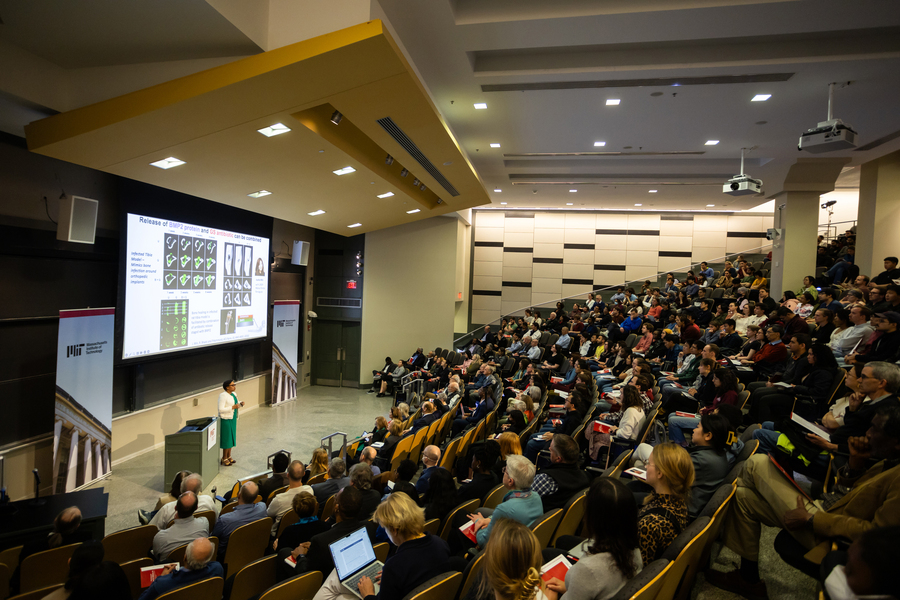
Hammond, a globally recognized chemical engineer, shared her insights during the 2023-24 James R. Killian Jr. Faculty Achievement Award lecture. This prestigious award, established in 1971 to honor MIT’s 10th president, recognizes outstanding professional contributions by MIT faculty. Hammond was selected for her remarkable achievements as well as her warmth, thoughtful leadership, and ethical integrity.
“Professor Hammond is a trailblazer in nanotechnology research,” said Mary Fuller, chair of MIT’s faculty. “Her work spans basic science to translational research in medicine and energy, pioneering new strategies for designing complex drug delivery systems for cancer treatment and non-invasive imaging.”
In January, Hammond took on the role of MIT’s vice provost for faculty, following eight years as chair of the Department of Chemical Engineering. She was appointed an Institute Professor in 2021.
Innovative Nanotechnology Research
Central to Hammond’s research is a novel technique she developed for creating thin films that encapsulate nanoparticles. By adjusting the chemical composition of these films, they can be tailored for specific drug delivery or gene delivery applications, targeting cells such as cancer cells.
To fabricate these films, Hammond layers positively charged polymers onto a negatively charged surface and alternates with additional layers. Each layer can incorporate drugs or other beneficial molecules, like DNA or RNA. Depending on the application, some films may consist of hundreds of layers while others may contain just one.
“The layer-by-layer process allows me to select biocompatible degradable polymers alongside our drug materials,” Hammond explained. “This enables the creation of thin film layers with various drugs released in a controlled manner as the film degrades. This simple water-based technique opens new possibilities for complex drug delivery systems.”
Applications in Medicine and Cancer Treatment
Hammond also highlighted the potential of these films in enhancing bone growth. Her lab has developed films using two proteins—BMP-2 to encourage adult stem cells to become bone cells and VEGF to promote blood vessel formation necessary for bone regeneration.
The coatings were designed to release VEGF initially over about a week and continue with BMP-2 for up to 40 days. Experiments with mice indicated that this approach successfully stimulated bone growth comparable to natural bone.
As a member of MIT’s Koch Institute for Integrative Cancer Research, Hammond has also created specialized coatings to enhance the effectiveness of nanoparticles used in cancer therapy, such as liposomes and PLGA-based nanoparticles.
“Think of them like a gobstopper with multiple layers that dissolve sequentially,” Hammond described about her multi-layered drug carriers.
Utilizing this technique, Hammond developed nanoparticles capable of delivering a dual-action treatment for cancer cells. The particles first release nucleic acids like siRNA to deactivate cancer genes, followed by chemotherapy drugs like cisplatin to which the cancer cells become more susceptible.
The particles also feature a stealth layer that protects them from degradation in the bloodstream and enhances their uptake by tumor cells through specific binding molecules.
Targeting Ovarian Cancer and Immune Response
In her recent research, Hammond has focused on nanoparticles designed to target ovarian cancer and reduce the chances of disease recurrence post-chemotherapy. While initial treatments are often effective, about 85% of patients experience tumor recurrence with highly drug-resistant profiles.
By adjusting the coatings on these nanoparticles, Hammond has engineered them to either penetrate tumor cells or adhere to their surfaces. She aims to stimulate an immune response against recurrent tumor cells by delivering IL-12 cytokine to nearby immune cells.
“In ovarian cancer cases where immune cells are scarce, it’s challenging to provoke an immune response,” she stated. “However, if we can activate even a few immune cells nearby, we might achieve significant results.”
The nanoparticles designed by Hammond successfully induced a long-term memory T-cell response in mice, preventing the recurrence of ovarian cancer.
Reflection on MIT’s Impact
Concluding her lecture, Hammond reflected on the transformative impact MIT has had on her career. “This institution is truly special; it fosters collaboration and enables us to achieve what we could not accomplish alone. The support from friends, colleagues, and students is invaluable.”
