



Newsroom

Innovative Research Grants to Enhance Water and Food Systems at MIT
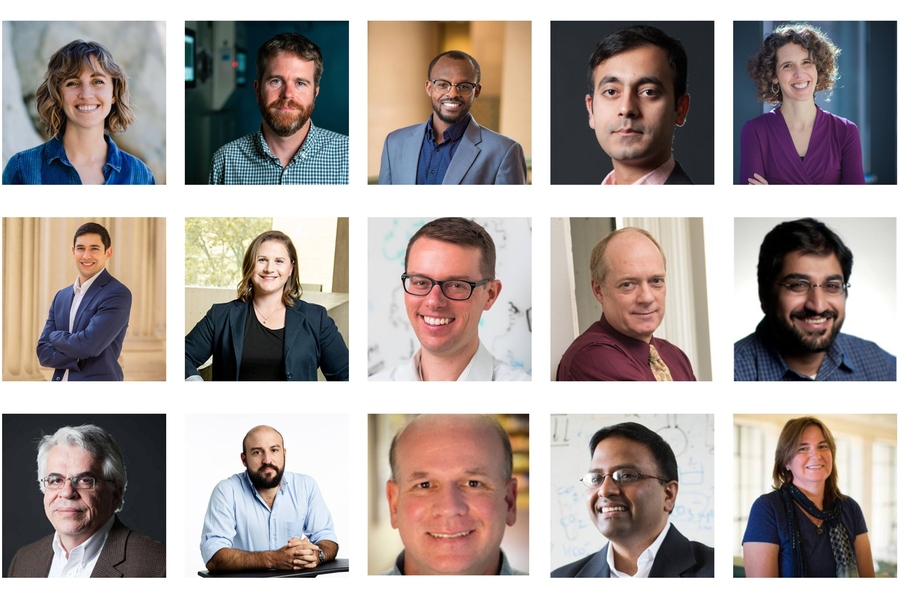
Today marks a significant milestone as the Abdul Latif Jameel Water and Food Systems Lab (J-WAFS) announces its ninth round of seed grants aimed at fostering innovative research projects at MIT. These grants are dedicated to supporting research efforts that address critical challenges surrounding water and food resources, particularly in the context of a growing global population and pressing climate changes.
Supporting Breakthroughs Across Water and Food Systems
This year, ten groundbreaking projects led by 15 researchers from seven diverse departments will receive support. These initiatives tackle various challenges through advanced materials, technological innovations, and novel resource management strategies. Key objectives include the removal of harmful chemicals from water sources, the development of monitoring systems for aquaculture industries, and the optimization of water purification materials.
Renee J. Robins, the executive director of J-WAFS, emphasizes the importance of the seed grant program as the flagship initiative. She states, “The funding aims to ignite transformative MIT research that addresses intricate issues affecting our water and food systems. The selected projects this year exhibit great potential, and we eagerly anticipate the advancements these talented researchers will achieve.”
Innovative Technologies for Aquatic Monitoring and Microbiome Control
Among the notable projects is that of Sara Beery, an assistant professor in the Department of Electrical Engineering and Computer Science (EECS). She is developing an automated system to estimate salmon populations in the Pacific Northwest (PNW), a region where salmon have sustained human communities for over 7,500 years. With threats such as overfishing and climate change endangering salmon populations, accurate counting during their seasonal migrations is essential for effective fishery management.
Beery’s team aims to combine sonar technology with computer vision and machine learning (CVML) to create a detailed monitoring system that provides unprecedented spatial and temporal insights into salmon populations. This innovative approach will allow for automatic detection and tracking of individual fish as they swim upstream, adapting to varying river conditions.
Another exciting project led by Michael Triantafyllou, alongside Robert Vincent and Otto Cordero, focuses on controlling harmful bacteria in aquaculture feed production. The U.S. aquaculture industry is valued at $1.5 billion annually but faces challenges in meeting demand due to fluctuating survival rates linked to uncontrolled microbiomes.
The team plans to monitor the microbiome composition in shellfish hatcheries to identify detrimental microbes and promote beneficial ones, ultimately aiming to enhance larval protection and prevent future outbreaks. Their findings will be shared with local aquaculture communities to bolster sustainable production.
Advancing Crop Resilience Amid Climate Change
David Des Marais from the Department of Civil and Environmental Engineering is investigating plant responses to elevated carbon dioxide (CO2) levels, aiming to develop breeding strategies that maximize crop yields under future climate scenarios. His research explores how crops like wheat and rice respond to increased CO2, known as the ‘CO2 fertilization effect’, while optimizing tillering responses to enhance overall grain yield.
Darcy McRose is researching how plant metabolites and soil bacteria can improve phosphorus bioavailability in soils, addressing a critical nutrient limitation in agriculture. Her work aims to create a tunable system for phosphorus solubilization that ensures nutrients are available when needed while preventing environmental runoff.
Tackling Water Pollutants with Cutting-Edge Materials
Several funded projects are also dedicated to addressing pollutants in water, particularly per- and polyfluoroalkyl substances (PFAS), often referred to as ‘forever chemicals’ due to their persistence in the environment. Aristide Gumyusenge is utilizing metal-organic frameworks for affordable PFAS detection in drinking water, while Carlos Portela and Ariel Furst are developing advanced materials designed for effective PFAS filtration.
Rohit Karnik is focusing on rapid monitoring technologies for trace contaminants in water. His proposed microbead sensors aim to provide a portable solution for detecting biological and chemical pollutants, enhancing accessibility for field studies.
Moreover, Alexander Radosevich and Timothy Swager are collaborating on innovative methods for on-site arsenic detection in water supplies, a critical issue affecting millions globally. Their approach utilizes chemical sensors designed to selectively detect arsenic at low concentrations, providing vital information for public health.
Rajeev Ram is developing a portable monitoring system for nitrogen pollutants that threaten waterways across the U.S. His research aims to provide affordable solutions for environmental sensing using advanced Raman spectroscopy techniques.
Innovative Solutions for Wastewater and Food Security
Lastly, Kripa Varanasi and Angela Belcher are creating a novel sponge-based disinfection technology targeting antibiotic-resistant bacteria in wastewater. Their approach seeks to preserve beneficial bacteria while effectively eliminating harmful pathogens, which is particularly important for sustainable water management.
In addition to these projects, J-WAFS will fund a research initiative led by Greg Sixt focusing on adapting food systems to climate change in the Lake Victoria Basin of East Africa. This collaborative effort aims to enhance land and water management practices within the basin to ensure food security amid changing environmental conditions.
“The funding aims to ignite transformative MIT research that addresses intricate issues affecting our water and food systems.” – Renee J. Robins
