



Newsroom

Innovative Study Reveals Memory Encoding Across Multiple Brain Regions
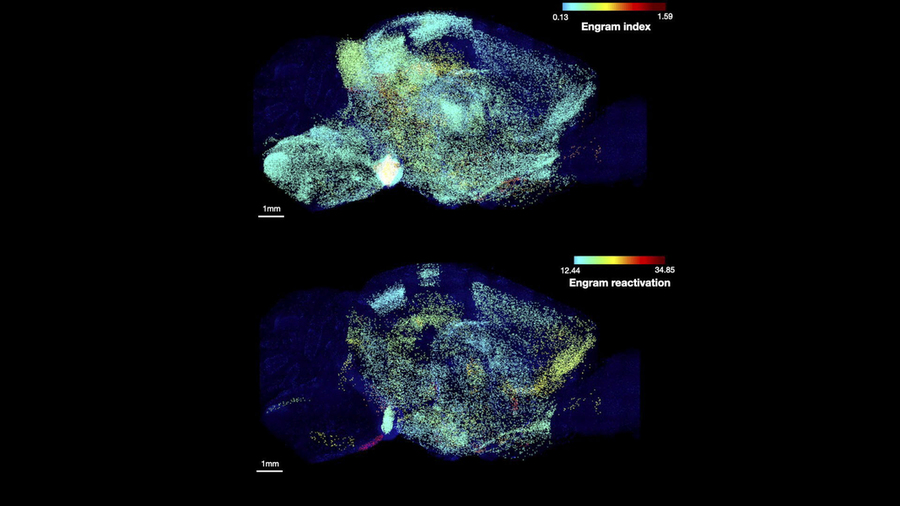
New research reveals that mammalian memory is stored as a unified, distributed engram complex across multiple brain regions, providing a more robust and efficient mechanism than previously understood.
Unveiling the Distributed Memory Engram Complex
A research chem team at MIT’s Picower Institute has provided the most comprehensive evidence that memory in mammals is stored not in isolated regions like the hippocampus alone, but across a widely connected network spanning numerous brain areas. This unified engram complex was first hypothesized over a century ago and has now been confirmed through advanced techniques that map memory encoding and recall neurons throughout the brain.
Mapping Memory Across the Brain
The team conducted unbiased analyses on over 247 brain regions in mice exposed to novel environments paired with mild electrical stimuli. Utilizing fluorescent tagging of neurons involved in memory encoding and recall, combined with SHIELD optical clearing technology, they created detailed brain-wide maps highlighting both known and previously unrecognized memory-associated regions. These maps allowed them to rank 117 regions by their likelihood of contributing to the memory engram complex.
Experimental Validation Through Optogenetics
Using optogenetic methods, researchers stimulated specific brain areas from their ranked list to artificially induce fear memory recall behaviors in mice, even in neutral environments. Activation of these regions elicited robust freezing responses consistent with memory recall, while stimulation of unrelated areas did not, confirming the functional roles of identified engram regions and their network connectivity.
Enhanced Recall Through Distributed Activation
Further experiments showed that simultaneous stimulation of multiple engram regions produced significantly stronger memory recall than activating single or paired areas alone. This suggests that distributed storage across several interconnected sites enhances the vividness and robustness of memories.
“Storing memories across a widespread network allows for more efficient recall and greater resilience against localized brain damage.”
Implications for Memory Research and Therapeutics
The distributed nature of the engram complex offers new avenues for understanding memory resilience and potential clinical strategies to combat memory impairments. Targeting understudied engram cells outside traditional hippocampal or cortical regions may restore functions lost due to disease or injury, opening promising research directions for future interventions.
Image credit: MIT Picower Institute for Learning and Memory
