



Newsroom

Innovative Takeda Fellowship Program Enhancing AI-Driven Health Research
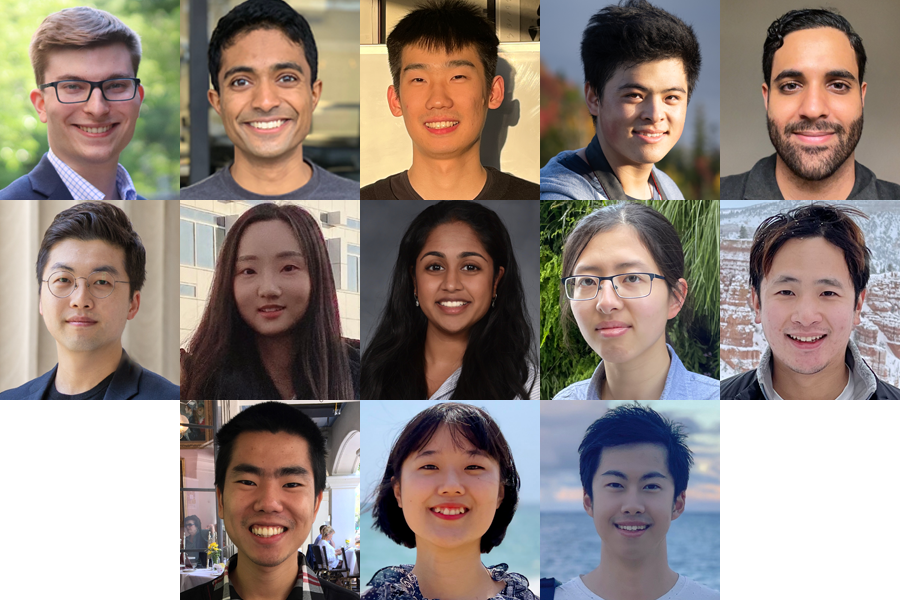
The School of Engineering has proudly announced the selection of 13 new Takeda Fellows for the 2023-24 academic year. Supported by Takeda, these graduate students will embark on innovative research projects, exploring areas such as remote health monitoring for virtual clinical trials and the development of ingestible devices for long-term diagnostics at home.
MIT-Takeda Program Overview
Now in its fourth year, the MIT-Takeda Program fosters a collaborative environment between MIT’s School of Engineering and Takeda, emphasizing the integration of artificial intelligence (AI) capabilities to enhance human health and advance drug development. This program, part of the Abdul Latif Jameel Clinic for Machine Learning in Health, merges various disciplines, blending theoretical knowledge with practical application and facilitating partnerships between academia and industry.
The 2023-24 Takeda Fellows include a diverse group of scholars, each contributing to groundbreaking research in their respective fields.
Fellows’ Innovative Research Highlights
- Adam Gierlach, PhD candidate in Electrical Engineering and Computer Science, merges biotechnology with machine learning to develop ingestible devices for diagnosing and managing gastrointestinal diseases.
- Vivek Gopalakrishnan focuses on real-time computer vision algorithms to improve image-guided neurosurgery through 3D intraoperative guidance systems.
- Hao He advances passive, continuous health monitoring systems supporting virtual clinical trials, creating equitable AI models across demographics.
- Chengyi Long employs interdisciplinary methods in Civil and Environmental Engineering to predict microbial dynamics impacting health management.
- Omar Mohd combines micro-technologies with AI to explore spatial profiling in cancer research, aiming to understand drug resistance.
- Sanghyun Park integrates AI with biomedical engineering to develop in-situ forming implants that enhance drug delivery efficacy.
- Huaiyao Peng pioneers AI techniques to model ovarian cancer organoids, identifying biomarkers and therapeutic targets.
- Priyanka Raghavan advances predictive chemistry by developing machine learning models for small-molecule reactivity to speed drug discovery.
- Zhiye Song works on wearable medical devices optimized for low power real-time decision-making via machine learning.
- Peiqi Wang develops machine learning tools to improve interpretation of medical images for clinical decisions.
- Oscar Wu merges quantum chemistry with deep learning to create open-source software for high-throughput drug screening.
- Soojung Yang uses generative modeling and atomistic simulations to study protein dynamics, aiding drug design.
- Yuzhe Yang develops machine learning models using nocturnal breathing signals to enhance disease diagnosis and tracking.
“This cohort embodies the future of interdisciplinary innovation, combining AI and biotechnology to transform healthcare and drug development.”
Impact and Future Prospects
The Takeda Fellowship program not only nurtures cutting-edge research but also bridges the gap between academic innovation and real-world healthcare applications. These fellows’ projects highlight a promising future where AI-driven technologies play an integral role in diagnostics, treatment, and understanding of complex diseases.
As these students continue their work, their contributions are expected to catalyze advancements in medical devices, computational biology, and precision medicine, ultimately improving patient outcomes globally.
