



Newsroom

Innovative Ultrastable MOFs Designed Through Advanced Computational Modeling for Diverse Applications
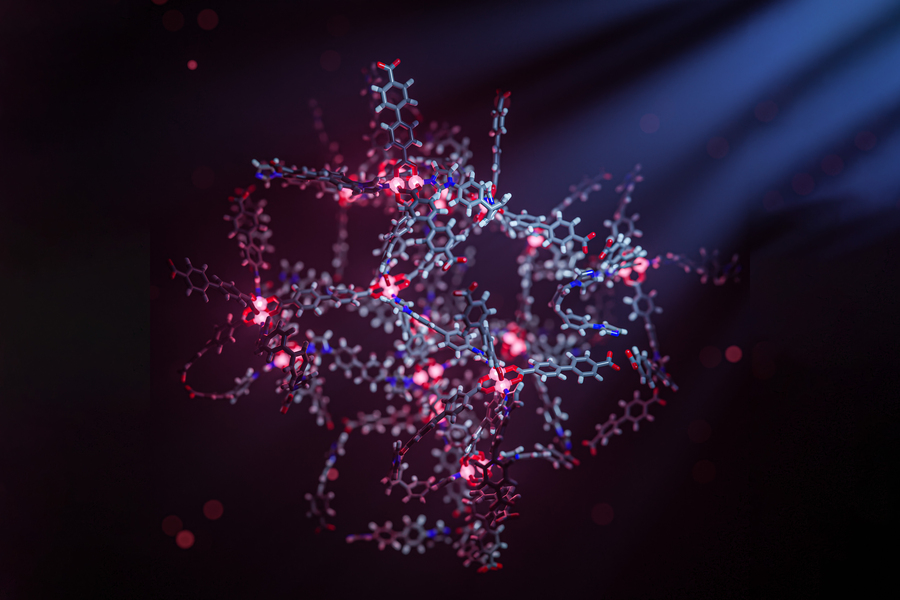
Metal-organic frameworks (MOFs) represent a transformative class of materials with customizable structures that unlock unprecedented potential in gas storage, catalysis, and drug delivery through their exceptional stability and design versatility.
Understanding the Structure and Versatility of MOFs
Metal-organic frameworks are built from secondary building units containing metals such as zinc or copper, linked together by organic molecules. This modular design allows for an expansive variety of configurations, much like assembling LEGO blocks, enabling tailored properties for diverse applications.
The porous nature of MOFs makes them highly suitable for tasks involving gas storage and separation, as well as delivery systems for drugs and imaging agents in biological contexts.
Predicting Stability Through Advanced Computational Models
Stability remains a critical challenge for MOFs intended for catalysis or gas storage, where open structures are desired but long-term robustness is essential. To address this, researchers developed machine-learning models trained on extensive literature data to predict thermal and activation stability of various MOF designs.
By analyzing roughly 500 highly stable MOFs and decomposing them into 120 secondary units and 16 linkers, the team generated around 50,000 new structures using 750 distinct architectures. Their model successfully identified about 10,000 ultrastable candidates excelling in both thermal and activation stability.
Applications in Gas Storage and Environmental Impact
These ultrastable MOFs demonstrated promising deliverable capacities for methane storage and release — a key factor in reducing atmospheric emissions and converting methane into valuable chemicals like methanol. Mechanical stability analyses further reinforced their suitability for practical deployment.
Notably, certain building blocks consistently yielded more stable frameworks, including gadolinium-based secondary units and cobalt-containing porphyrins, highlighting targeted avenues for material optimization.
“Designing effective MOFs requires consideration of multiple stability types, but our models facilitate near-zero-cost predictions of thermal and activation stability.”
Future Directions and Research Accessibility
The research team is actively synthesizing these newly predicted MOFs to validate their performance in catalysis and gas separation. Additionally, a comprehensive database of ultrastable materials has been published to empower further computational screening and experimental efforts.
This resource is expected to accelerate discovery and application of stable MOFs tailored to specific commercial and scientific needs.
