


Newsroom

Innovative Yeast-Encapsulated Filter for Cost-Effective Lead Removal from Water
Every year, breweries produce a significant amount of surplus yeast, which often goes to waste. However, innovative researchers from leading institutions have developed a method to repurpose this yeast for environmental benefits, specifically to absorb lead from contaminated water sources.
Biosorption and Hydrogel Encapsulation
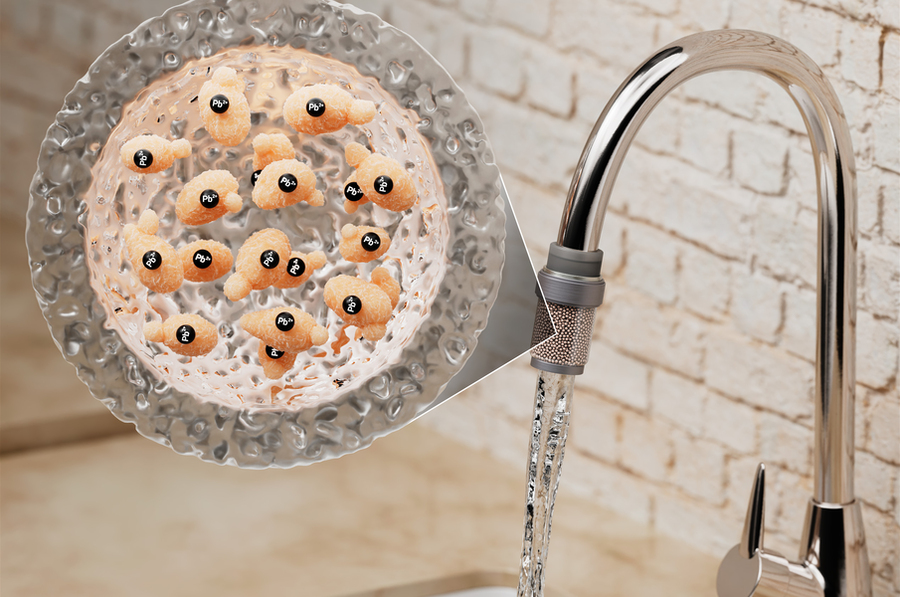
Utilizing a process known as biosorption, yeast has demonstrated the ability to absorb trace levels of lead and other heavy metals from water efficiently. The researchers have encapsulated the yeast within hydrogel capsules, creating a practical filter that effectively removes lead from drinking water. This encapsulation allows for easy removal of the yeast once the water has been treated.
The hydrogel surrounding the yeast is porous enough to allow water to flow in and interact with the yeast cells, mimicking their natural movement in water, resulting in cleaner water. This bio-based and biodegradable technology presents a significant advantage over traditional filtration methods.
Applications and Study Insights
The researchers foresee the potential for this technology to be employed in household water filtration systems or scaled up for large-scale treatment in municipal water plants.
A recent study published in a prominent journal highlights the collaboration between researchers who combined their efforts to enhance the scalability of this yeast-based filtration method by encapsulating it within hydrogels.
Mechanical Stability and Prototype Development
The encapsulated yeast’s mechanical stability was rigorously tested to ensure it can withstand the forces encountered during regular water flow, such as from home faucets or in treatment facilities serving multiple households.
Researchers successfully constructed a prototype biofilter capable of treating lead-contaminated water continuously while complying with U.S. Environmental Protection Agency guidelines.
This research represents a significant advancement in water treatment technology, showcasing how repurposing natural resources like yeast can lead to innovative solutions for pressing environmental issues.
Environmental Impact and Community Benefits
This innovative approach is expected to consume less energy than conventional methods for removing trace inorganic compounds from water, thus offering a more sustainable solution.
By minimizing waste and environmental impact, this technology not only addresses contamination issues but also promotes economic opportunities, particularly in underserved communities that have historically struggled with access to clean water.
Future Development and Broader Applications
Future research aims to explore methods for recycling or replacing yeast after its usage and investigating sustainable sources for hydrogels that do not rely on fossil fuels.
There is potential for this technology to be adapted for targeting other emerging contaminants, such as PFAS or microplastics, expanding its applicability across various environmental concerns.
