



Newsroom

MIT Faculty Members Recognized with National Academy of Sciences Membership in 2023
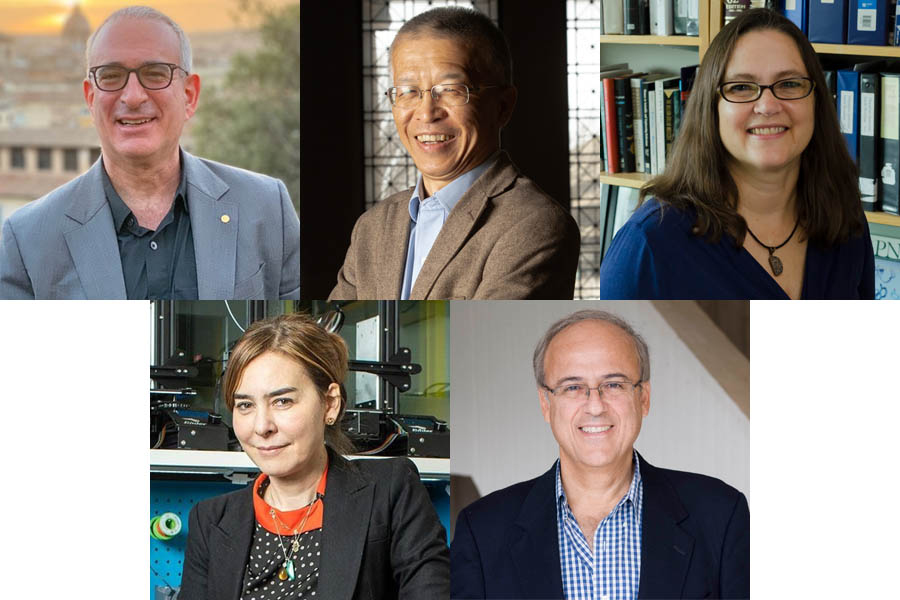
The National Academy of Sciences has proudly inducted 120 new members and 23 international members this year, including five esteemed faculty members from MIT. Recognized for their ongoing contributions to original research, Joshua Angrist, Gang Chen, Catherine Drennan, Dina Katabi, and Gregory Stephanopoulos have achieved one of the highest honors available in the scientific community.
A Legacy of Excellence and Scientific Recognition
Founded in 1863 under a Congressional charter signed by Abraham Lincoln, the National Academy of Sciences is a distinguished private nonprofit organization. Each year, it elects new members who are acknowledged by their peers for their exceptional contributions to scientific research. Collaborating with the National Academy of Engineering and the National Academy of Medicine, its mission includes promoting education and research, recognizing outstanding knowledge contributions, and enhancing public understanding of science, engineering, and medicine.
Currently, the National Academy of Sciences boasts 2,565 active members and 526 international members. Among this year’s inductees are eight alumni from MIT, including Thomas Banks, Joan W. Bresnan, Jennifer Elisseeff, along with current faculty member Dina Katabi, and others recognized for their remarkable achievements.
Profiles of Five Esteemed MIT Faculty Members
Joshua Angrist serves as the Ford Professor of Economics at MIT and is also a co-founder and director of MIT’s Blueprint Labs. His innovative research employs natural experiments to address critical economic inquiries and devise econometric tools that unveil the causal relationships between individual decisions and government policies. Angrist’s work spans various fields including education economics, labor market impacts of social programs, and the effects of immigration and regulation.
Angrist completed his bachelor’s degree in economics at Oberlin College in 1982 and earned his PhD at Princeton University in 1989. His academic journey includes teaching stints at Harvard University and the Hebrew University of Jerusalem before joining MIT in 1996. Notably, he was awarded the Sveriges Riksbank Prize in Economic Sciences in Memory of Alfred Nobel in 2021 alongside Guido Imbens and David Card.
Gang Chen is recognized as the Carl Richard Soderberg Professor of Power Engineering within the Mechanical Engineering Department. He is renowned for his groundbreaking work in nanoscale heat transfer and energy conversion technologies. His research focuses on enhancing thermoelectric materials, semiconductors, and water desalination materials while advancing solar-thermal and photovoltaic technologies. In 2022, Physics World highlighted his discovery of cubic boron arsenide as a superior semiconductor.
Chen received both his bachelor’s and master’s degrees from Huazhong University of Science and Technology in China, followed by his PhD from UC Berkeley. After working at Duke University and UCLA, he joined MIT in 2001. Committed to mentorship and diversity in STEM, Chen has guided numerous students through master’s and PhD programs.
Innovations in Science and Education
Catherine Drennan is a professor of biology and chemistry whose innovative approach combines X-ray crystallography with cryo-electron microscopy to visualize molecular processes. She earned her bachelor’s degree from Vassar College and her PhD from the University of Michigan before joining MIT in 1999. Drennan is also dedicated to education, developing resources that assist educators in elucidating chemical principles in biology.
Recently honored with the 2023 William C. Rose Award from the American Society for Biochemistry and Molecular Biology for her contributions to biochemical research, Drennan has received numerous accolades throughout her career including various teaching awards and fellowships.
Dina Katabi holds the position of Thuan and Nicole Pham Professor of Electrical Engineering and Computer Science at MIT. As director of the MIT Center for Wireless Networks and Mobile Computing, her research focuses on mobile computing, machine learning, and computer vision. Katabi’s innovations include developing wireless devices that leverage AI to monitor health conditions such as Parkinson’s disease without intrusive methods.
A graduate from the University of Damascus, she continued her studies at MIT where she obtained both her master’s and PhD degrees. Katabi has been recognized with several prestigious awards including the MacArthur Fellowship and ACM Grace Murray Hopper Award.
Leadership in Biotechnology and Metabolic Engineering
Gregory Stephanopoulos serves as the W.H. Dow Professor of Chemical Engineering and Biotechnology at MIT, where his research explores biotechnology with an emphasis on metabolic engineering. His team is dedicated to creating biological methods for chemical product production and biofuels while also investigating cancer as a metabolic disease.
With degrees from the National Technical University of Athens, University of Florida, and University of Minnesota, Stephanopoulos has held various academic positions since joining MIT in 1985. He has received multiple honors including the Gaden Award for Biotechnology and Bioengineering, further solidifying his reputation as a leader in the field.
“Achieving one of the highest honors in science reflects not only individual brilliance but also dedication to advancing knowledge for society’s benefit.”
