



Newsroom

MIT School of Engineering Expands Faculty with Diverse Expertise in Advanced Technologies
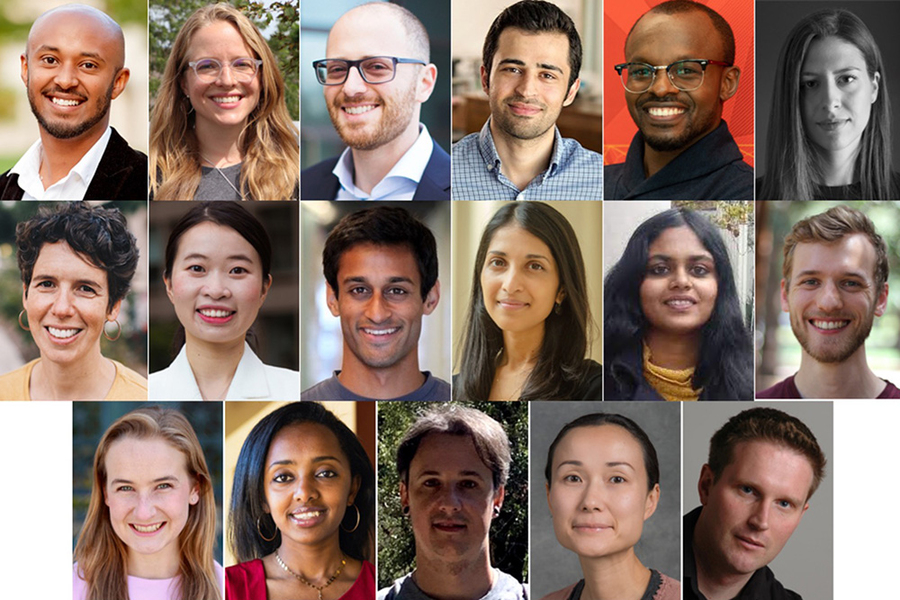
MIT School of Engineering welcomes 17 new faculty members whose innovative research spans robotics, machine learning, and environmental impacts, set to drive transformative advancements in engineering and science.
A Diverse Group of Innovators Joining MIT
The School of Engineering is excited to introduce a remarkable cohort of new faculty who bring expertise across a spectrum of disciplines, including material sciences, robotics, and machine learning. Their combined efforts will enhance research capabilities and educational excellence throughout MIT.
Dean Anantha Chandrakasan highlights their critical role as educators, mentors, and collaborators who will strengthen the community and broaden the School’s impact.
Pioneering Research in Chemical and Environmental Fields
Among the faculty are leaders in chemical environmental engineering and ecosystem ecology, advancing understanding of climate change effects and developing precision therapies. Their work integrates computational and experimental methods to tackle global challenges.
For instance, César Terrer’s research unravels soil-plant-microbe interactions affecting the carbon cycle, while Brandon J. DeKosky develops high-throughput platforms accelerating drug discovery through molecular immune analysis.
Advances in Robotics and Computational Sciences
New faculty like Kaitlyn Becker are innovating soft robotics for delicate manipulation across environments from desktops to deep seas. Others focus on computational algorithms and machine learning to reconstruct and interact with complex 3D environments, exemplified by Vincent Sitzmann’s work at the intersection of neural rendering and vision.
“The strength of a vibrant engineering community lies in its diverse talents united by a shared vision to innovate for a better future.”
Commitment to Educational Excellence and Inclusion
Faculty members also champion diversity and inclusion initiatives alongside their research. For example, Iwnetim “Tim” Abate leads SciFro Inc., empowering African youth and underrepresented minorities through scientific innovation. Ritu Raman actively supports women in STEM, fostering environments where emerging scientists can thrive.
Interdisciplinary Impact Across MIT’s Ecosystem
The new hires span multiple departments such as Electrical Engineering and Computer Science, Mechanical Engineering, Chemical Engineering, Civil and Environmental Engineering, and Brain and Cognitive Sciences. Many hold joint appointments with the Schwarzman College of Computing or cross-disciplinary institutes, emphasizing MIT’s integrative approach to solving complex problems.
These appointments reflect MIT’s commitment to converging cutting-edge research areas to drive innovation in both technology and societal impact.
