



Newsroom

MIT Students Champion Increased Science Funding to Advance Research and Innovation
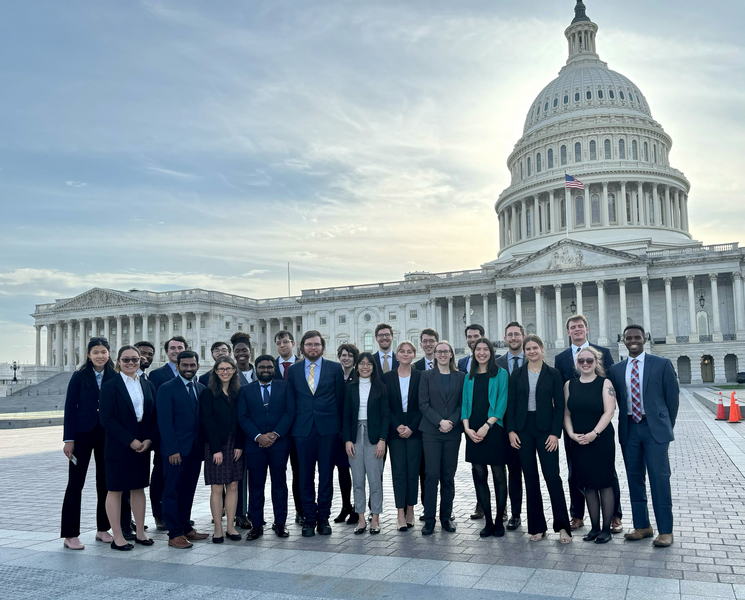
This spring, a group of 26 students and postdoctoral researchers from MIT made an impactful journey to Washington, D.C. Their mission was to engage with congressional staffers and advocate for enhanced science funding for the fiscal year 2025, particularly in light of recent budget cuts announced for various federal science agencies in FY24.
Advocacy Journey to Capitol Hill
Over the course of two days, April 8-9, these participants met with representatives from 85 congressional offices across 30 states, collectively pushing for a substantial budget of $89.46 billion dedicated to science funding spanning 11 federal scientific agencies.
Every spring, the MIT Science Policy Initiative (SPI) organizes Congressional Visit Days (CVD), providing participants with a firsthand experience of the U.S. federal policymaking process. This initiative not only highlights the critical importance of advocacy in scientific research but also connects researchers with alumni and members from the MIT Washington Office to explore potential policy careers.
Preparation and Training for Effective Advocacy
This year’s CVD was co-organized by Marie Floryan and Andrew Fishberg, both PhD candidates in Mechanical Engineering and Aeronautics & Astronautics. Prior to their visit, participants took part in two training sessions led by SPI, the MIT Washington Office, and the MIT Policy Lab. These sessions equipped them with knowledge about federal funding appropriations, the legislative roles of elected officials and their staffers, and effective strategies for academic researchers to engage in science advocacy.
Julian Ufert, a doctoral student in chemical engineering, remarked, “CVD was a remarkable opportunity to share insights from my research with policymakers, learn about U.S. politics, and serve the greater scientific community. I thoroughly enjoyed connecting with others on Capitol Hill as well as fellow MIT students and postdocs passionate about science policy.”
Key Topics Discussed with Policymakers
Alongside their primary goal of advocating for increased funding, participants also addressed specific research topics. Their discussions spanned a wide array of subjects, including artificial intelligence (AI), cybersecurity, energy production and storage, and biotechnology. The emergence of transformative AI technologies like ChatGPT has heightened interest in AI-related initiatives, leading many congressional offices to participate in the newly established bipartisan AI Task Force.
“It was fascinating to witness the keen interest and involvement of Congressional offices in science and technology policy matters.” – Vipindev Vasudevan
These conversations proved beneficial for both sides; participants gained insights into the legislative process while staffers received direct feedback from academic researchers regarding the essential requirements for fostering scientific advancement and innovation.
Insights Gained and Impact on Researchers
Vipindev Vasudevan, a postdoc specializing in electrical and computer engineering, noted, “It was fascinating to witness the keen interest and involvement of Congressional offices in science and technology policy matters. Most staffers were informed about technological advancements and eager to understand how our research could shape societal progress.”
Dina Sharon, a PhD student in chemistry, emphasized the educational value of these interactions: “The offices where we met with Congressional staffers served as valuable classrooms! Our discussions revealed policymakers’ objectives, how science can facilitate these goals, and how scientists can bridge the gap between research and policy domains.”
Participants also articulated how federal funding has directly influenced their academic journeys, discussing how grants have supported their graduate education and underscoring the need for open access to research.
