



Newsroom

Navigating Visual Communication in Research: The Role of AI and Ethics
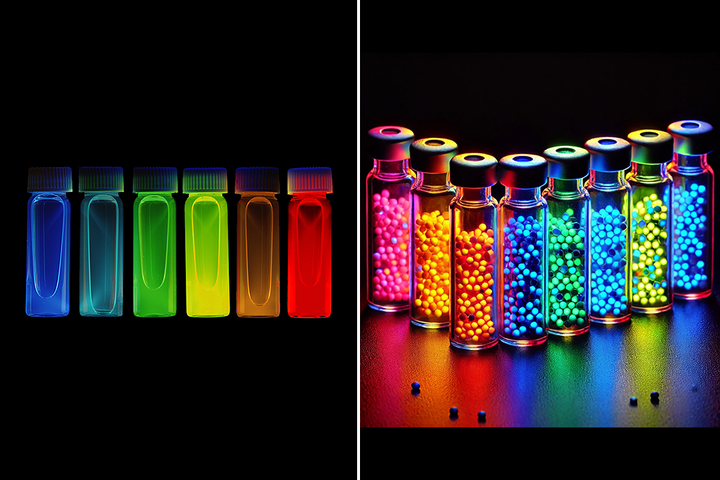
For over three decades, a dedicated science photographer has collaborated with professors, researchers, and students at MIT to enhance the visual communication of their work. Throughout this period, she has witnessed the emergence of various tools that assist in creating impactful images—some of which have proven beneficial, while others hinder the accurate portrayal of research findings. In a recent article featured in Nature magazine, she addresses the growing prevalence of generative artificial intelligence (GenAI) in image creation and explores the complexities and implications it poses for effectively conveying research.
The Role and Ethics of Science Photography
In her discussion, she raises a personal concern about the future role of science photographers within the research community. When asked about the manipulation of images, she emphasizes that any photograph can be seen as ‘manipulated’ the moment it is captured. The choices made in framing and structuring the content of an image inherently alter its representation of reality. It’s crucial to remember that an image serves as a representation rather than a direct replication of the subject.
She underscores the importance of not altering the foundational data within images—like the structure of a specimen—while noting her own practice of enhancing visuals to convey specific messages. For example, she once removed a petri dish from an image of a yeast colony to highlight its remarkable morphology without changing the underlying data. Transparency is key; she always informs viewers when modifications are made to an image, as discussed in her handbook ‘The Visual Elements, Photography.’
Visual Communication Challenges in Research
Researchers are encouraged to prioritize ethical communication of their findings. With the rise of AI, she identifies three significant concerns regarding visual representation: distinguishing between illustration and documentation, addressing the ethics of digital manipulation, and ensuring researchers receive proper training in visual communication. She has long advocated for a visual literacy program aimed at current and future science and engineering researchers.
While MIT mandates communication training focused primarily on writing, visual communication has become equally crucial for journal submissions. She believes that many readers turn directly to figures after scanning abstracts, highlighting the need for critical analysis of published visuals. Discussions about ethical implications surrounding image alterations are essential; she recounts an incident where a student modified one of her images without permission, illustrating a gap in understanding ethical standards.
Any photograph can be seen as ‘manipulated’ the moment it is captured; choices in framing inherently alter reality’s representation.
Generative AI’s Impact on Scientific Imagery
As generative AI continues to evolve, its role in science communication must be carefully considered. Through practical examples, she questions the appropriateness of AI-generated images for documenting research. In her Nature article, she experimented with a diffusion model to create an image based on a specific prompt involving nano crystals, resulting in visuals that often appeared cartoonish rather than realistic.
Conversations among researchers and computer scientists have led to a consensus that clear guidelines must be established regarding acceptable practices in image generation. Crucially, AI-generated visuals should never serve as documentation. However, they hold potential value for illustrative purposes. If an AI-generated image is submitted for publication or presented at a conference, she firmly believes that researchers must disclose its origin.
