



Newsroom

Record-Breaking Virtual Conference Showcases Innovations in Microsystems Technology

The 18th Microsystems Annual Research Conference (MARC) overcame pandemic challenges with a dynamic virtual pivot that set new attendance records and showcased groundbreaking research shaping the future of nanotechnology and microsystems.
Adapting to New Realities: MARC’s Virtual Transformation
Graduate student co-chairs Jatin Patil and Kruthika Kikkeri led the research efforts for the 18th annual MARC in January 2022. Faced with the surge of the Omicron variant, they successfully transitioned the event from an on-campus gathering to an entirely online platform within three weeks. Physical poster displays became digital, live talks were replaced by prerecorded presentations, and social interactions shifted to virtual trivia, demonstrating remarkable flexibility and dedication from the entire student committee.
Record-Breaking Participation and Community Engagement
MARC 2022 set new records with 262 attendees and over 100 student abstracts from 37 MIT research groups, signaling unprecedented community involvement. Kikkeri noted how energizing it was to witness such engagement during isolating times, reaffirming MARC’s role as a vital platform for collaboration among students, faculty, and industry partners.
“MARC is like a crystal ball, offering a glimpse into the future of microsystems and nanotechnology.”
Diverse Research Topics Shaping Tomorrow
The conference featured presentations across nine carefully curated topics including integrated circuits, energy-efficient AI, quantum technologies, and nanomaterials. These sessions were led by graduate student chairs from EECS, underscoring the depth and breadth of MIT’s cutting-edge innovations.
Educational Insights Fueling Future Innovation
Keynote speakers emphasized the importance of education in addressing industry challenges. Professor Tsu-Jae King Liu highlighted the urgent need for innovative transistor scaling approaches and workforce revitalization in microelectronics education. IBM’s Jay M. Gambetta discussed quantum computing’s future potential and the critical intersection of computer science and physics education in driving innovation.
Looking Ahead: Collaboration and Opportunities
MIT.nano Director Vladimir Bulović and MTL Director Hae-Seung Lee applauded the student committee’s professionalism and foresaw exciting collaborative opportunities ahead. MARC continues to serve as a catalyst where groundbreaking ideas are refined and future technologies are born.
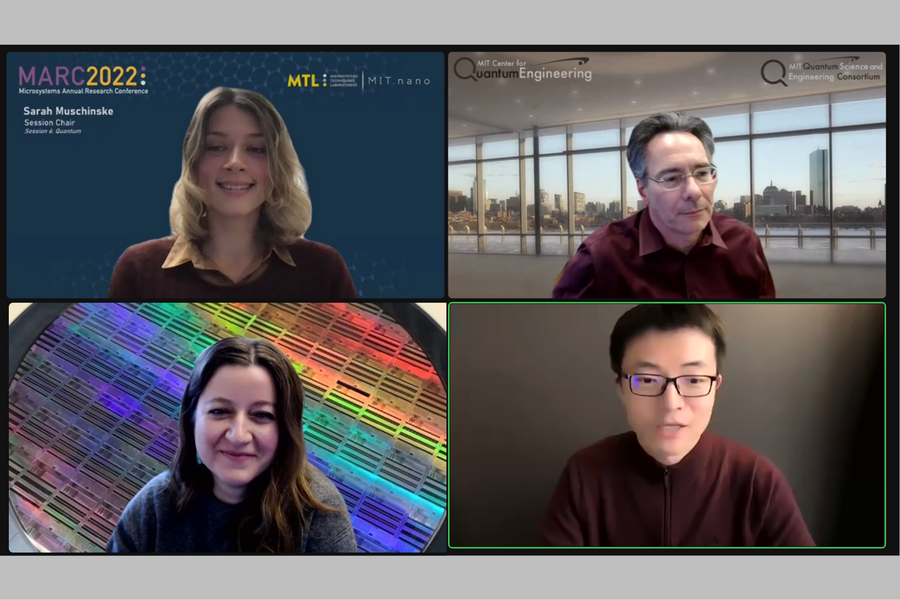
Student poster session highlights innovative projects at MARC 2022
