



Newsroom

Revolutionary Coated Bacteria: Sustainable Microbial Fertilizers for Enhanced Crop Growth
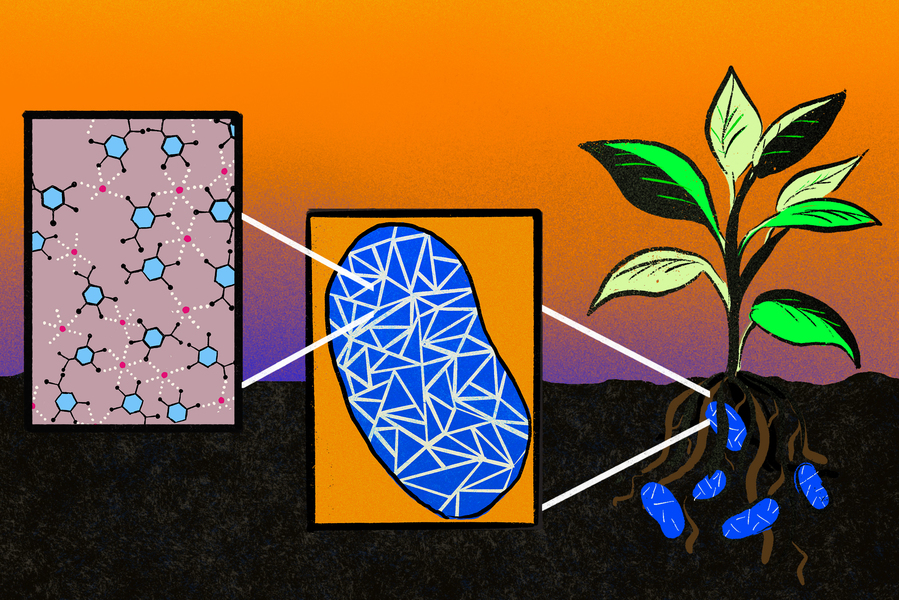
The production of chemical fertilizers is responsible for approximately 1.5% of global greenhouse gas emissions. To address this issue, researchers have proposed a more sustainable alternative: utilizing bacteria to replace some chemical fertilizers.
The Promise of Beneficial Bacteria
These beneficial bacteria can convert nitrogen gas into ammonia, providing essential nutrients for plants while also regenerating soil and offering protection against pests. However, the challenge lies in the sensitivity of these bacteria to heat and humidity, making large-scale production and transportation to farms difficult.
To tackle this challenge, innovative engineers have developed a metal-organic coating that safeguards bacterial cells from damage without hindering their growth or function. Recent studies indicate that these coated bacteria significantly enhance the germination rates of various seeds, including popular vegetables like corn and bok choy.
This protective coating could simplify the process for farmers looking to utilize microbes as fertilizers. The technology allows for the preservation of these bacteria during the drying process, making distribution more cost-effective by transforming them into a dry powder form instead of a liquid. Furthermore, the bacteria can withstand temperatures up to 132°F (56°C), eliminating the need for cold storage.
The Environmental Cost of Chemical Fertilizers
The production of chemical fertilizers relies heavily on an energy-intensive process known as the Haber-Bosch method, which combines nitrogen from the air with hydrogen to create ammonia under high pressure. This method not only contributes to substantial carbon emissions but also depletes soil nutrients over time.
To combat soil depletion, some farmers are adopting regenerative agriculture practices, which involve various strategies like crop rotation and composting to maintain soil health. Nitrogen-fixing bacteria play a crucial role in this approach, converting atmospheric nitrogen into usable ammonia.
While some farmers have started using microbial fertilizers by growing them in onsite fermenters, this approach can be cost-prohibitive for many. Transporting these bacteria to rural areas is also challenging due to their susceptibility to heat damage and their fragility during freeze-drying processes.
“Using the most effective MPN coating, researchers observed a remarkable 150% increase in seed germination rates compared to seeds treated with uncoated microbes.”
Innovative Coating Technology
To protect these microbes from thermal and freeze-drying damage, researchers applied a metal-phenol network (MPN) coating, which had previously been utilized for encapsulating microbes in other applications. This coating consists of a combination of safe metals and organic compounds that self-assemble into a protective layer.
The coatings were tested on Pseudomonas chlororaphis, a nitrogen-fixing bacterium known for its plant-protecting properties. Results demonstrated that all coatings effectively protected the bacteria from heat up to 122°F (50°C) and relative humidity levels up to 48%. Moreover, the coatings successfully preserved the microbes during freeze-drying.
Using the most effective MPN, which combines manganese and epigallocatechin gallate (EGCG), researchers observed a remarkable 150% increase in seed germination rates compared to seeds treated with uncoated microbes. This effect was consistent across various seed types, including dill, corn, radishes, and bok choy.
Towards Sustainable Agriculture
In pursuit of commercializing this technology for widespread use in regenerative agriculture, a new company has been established. The aim is to make these microbial fertilizers economically accessible to small-scale farmers who may lack the resources for large fermentation setups.
The focus of this technology is to ensure it is affordable and accessible, ultimately promoting equitable practices in regenerative agriculture.
